WhatsApp API
 WhatsApp营销
 WhatsApp养号
 WhatsApp群发
 引流获客
引流获客
 账号管理
账号管理
 员工管理
员工管理
WhatsApp Marketing Case Studies | 3 Successful Strategies
作者:A2C.CHAT
An e-commerce company achieved a 40% increase in orders within 3 months by sending mass coupons. The key lies in sending at specific times (local time 10 AM-12 PM has the highest open rate). A clothing brand utilized broadcast lists to push limited pre-orders and used short links to track clicks, achieving a 25% conversion rate. Furthermore, an educational institution created learning groups, sending valuable content + interactive Q&A daily, which boosted student renewal rates by 60% over 6 months. Key takeaways: personalize content (include customer name), avoid spam, and integrate with holiday-specific activities.
StyleHub, a medium-sized clothing store in Hong Kong, tried using WhatsApp to improve customer repurchase rates in 2023. As a result, repeat customers grew by 37% within 6 months, the average order value increased by 22%, and overall revenue increased by 15%. They did not spend heavily on advertising but relied on a precise WhatsApp marketing strategy to re-engage lost customers.
The store previously relied on Facebook and Instagram ads, but the conversion rate was only 3%-5%, with an ad cost of about HK$8-12 per click. They later discovered that 80% of customers do not return on their own after the first purchase, and customers are unaware when new stock arrives. So they started using WhatsApp to build long-term relationships, eventually resulting in 45% of old customers repurchasing within 3 months, significantly higher than the industry average of 20%.
StyleHub’s WhatsApp marketing began with customer segmentation. They divided customers who had purchased in the past year into three categories: high-spending (single purchase HK$800+), medium-spending (HK$300-800), and low-spending (below HK$300), and sent different content to each group. High-spending customers received exclusive new product previews, medium-spending customers received styling suggestions + limited-time discounts, and low-spending customers received clearance specials. This segmentation boosted the open rate from the general 20% to 55%, as the content better matched customer needs.
They sent messages 1-2 times per week to avoid excessive disturbance. The key lay in timing and content, for example:
Another effective strategy was interactive promotions. They stopped only sending “discount information” and instead encouraged customer participation, such as:
In terms of cost, the cost per interaction for WhatsApp marketing was only HK$0.3-0.5, 80% lower than FB ads. They managed their customer list using free tools (like Google Sheets) and tracked the click-through rate with short links, finding that messages with product images had a click-through rate 3 times higher than plain text.
A Japanese restaurant in Taipei, “Sakura Tei,” introduced a WhatsApp ordering system in 2023, resulting in a 52% increase in order volume within 6 months. Takeout revenue increased from NT$180,000 to NT$270,000 per month, and net profit grew by 35%. The restaurant previously relied solely on phone orders, with an average order processing time of 3-5 minutes, and 20% of customers giving up due to a busy line. After switching to WhatsApp, order processing speed accelerated to an average of 45 seconds, customer service labor costs decreased by 40%, and customer satisfaction improved from 4.1 to 4.7 stars (out of 5).
The key was designing a “zero-friction” ordering process: customers could go from receiving the menu to completing payment without ever leaving WhatsApp, achieving a usage rate of 78% even among customers aged 60 and over. Compared to other restaurants using LINE Official Accounts (with an open rate of about 25%), Sakura Tei’s WhatsApp message open rate consistently remained at 85-90%, and 72% of customers placed an order within 3 hours of receiving a promotional message.
The core of Sakura Tei’s WhatsApp ordering system is the pre-made menu template. They divided all dishes into four main categories: “Sashimi/Sushi/Set Meals/Drinks,” with each category presented using code + image + price, for example:
Customers simply reply with the code, and the system automatically calculates the total price and sends a payment link. This approach reduced the single order processing time from 5 minutes to 1.2 minutes, allowing servers to handle an extra 30-40 orders per day.
They also discovered three key data points:
Consequently, they adjusted their push strategy, sending a fixed “Today’s Hidden Menu” every Wednesday at 3 PM, for example:
| Item Name | Original Price | Limited-time Price | Remaining Servings |
|---|---|---|---|
| Snow Crab Leg Miso Soup | NT$320 | NT$250 | 12/20 |
This “limited quantity + countdown” design ensured that 87% of the discounted items were sold out within 2 hours, and the add-on rate (customers adding other items) reached 65%.
The payment process was also optimized. The traditional method was to pay upon arrival, but 15% of reserved customers would no-show. Sakura Tei switched to using WhatsApp’s built-in payment, requiring a 30% deposit upon booking. As a result, the no-show rate dropped to 3%, and 92% of customers completed the final payment in the same chat window. They even found that orders requiring a pre-paid deposit had an average spending amount 18% higher than pay-on-arrival orders, attributing this to the psychological effect of “sunk cost fallacy.”
Xuesi Education, a Hong Kong tutoring center specializing in DSE prep, used WhatsApp for enrollment during the 2023 summer break. They received 1,200 course inquiries within 2 weeks, ultimately converting 487 new students, an enrollment rate of 40.6%. This was 3-5 times higher than traditional flyers (conversion rate 8-12%). They achieved this without spending heavily on advertising, relying instead on precise WhatsApp group operations to shorten the inquiry-to-enrollment cycle from an average of 7 days to 2.3 days. Monthly tuition revenue surpassed HK$1,850,000, setting a new historical high for the campus.
The key was their discovery that 82% of parents check tutoring information between 9 PM and 11 PM, but traditional customer service only operates until 6 PM. By switching to WhatsApp, they implemented AI auto-replies + human staff on duty until 12 AM, allowing 67% of nighttime inquiries to be answered within 15 minutes. Parent satisfaction immediately soared from 3.8 to 4.9 stars (out of 5).
Xuesi Education’s enrollment strategy begins with a ”3-minute trial lesson“. They send a 15-second clip of a teacher lecturing on WhatsApp, accompanied by:
“Click to claim the full 30-minute trial class. Submit your child’s most recent exam score for a complimentary copy of the ‘DSE Common Error Analysis Report.'”
This design encourages 73% of parents to proactively send their child’s scores, automatically completing the academic level assessment. The system then sends information based on the score range (e.g., sending basic class information for Math ≤50 points, and advanced courses for ≥70 points), which is 4 times more accurate than scattergun approaches.
They dissected the enrollment process into a ”5-stage funnel“:
This cadence resulted in 55% of enrollments happening within 72 hours of contact, and the average order value increased from HK$2,800 to HK$4,200 (due to add-on mock exam services).
They designed differentiated content for different grade levels. For example:
Technologically, they used the low-cost tool ManyChat to set up auto-reply rules. For example, when a parent sent “English,” it immediately pushed:
“Students taught by our English teacher, Mr. Wong, achieved a 5** rate of 37% in the 2023 DSE (compared to the city average of 11%). Reply ‘1’ to see student improvement case studies, ‘2’ to book a placement test, and ‘3’ to inquire directly about tuition fees.”
This interactive menu allowed 62% of conversations to move to the next stage, making it 2.8 times more effective than simply sending out information.
The most critical breakthrough was the ”Score Prediction“ feature. They asked parents to upload recent test papers, and the AI system analyzed the results within 20 minutes, reporting:
“Your child lost the most marks in the data handling section of Math (accounting for 43% of total lost marks). If they strengthen this area by 2 hours per week, the estimated DSE score increase is 8-12 points.”
This specific commitment boosted the enrollment rate by another 22%, and 91% of parents chose the course hours recommended by the system.
Currently, 70% of Xuesi Education’s new students come from the WhatsApp channel. The customer acquisition cost is only HK$120, which is 2-3 times lower than ground promotion (HK$400/person) or FB ads (HK$280/person). They even found that messages sent on Sunday at 4 PM had the highest open rate (92%), likely because parents start planning the next week’s tutoring schedule before the weekend ends.
 Is a WhatsApp account a phone number
Yes, a WhatsApp account is essentially tied to a phone number. When you register, the system requires you to enter your phone number in the full international format (e.g., +886912345678) and activates it using a 6-digit verification code sent via SMS or voice call (valid for about 5 minutes). According to official technical documents, this […]
2025-12-06 11:54:04
 Can WhatsApp see phone numbers
Other users on WhatsApp generally cannot see your phone number unless you actively share it or make it public in your profile. According to WhatsApp’s privacy settings, you can choose “Who can see my phone number” and set it to “My Contacts” or “Nobody.” Additionally, in group chats, administrators and members might also see your […]
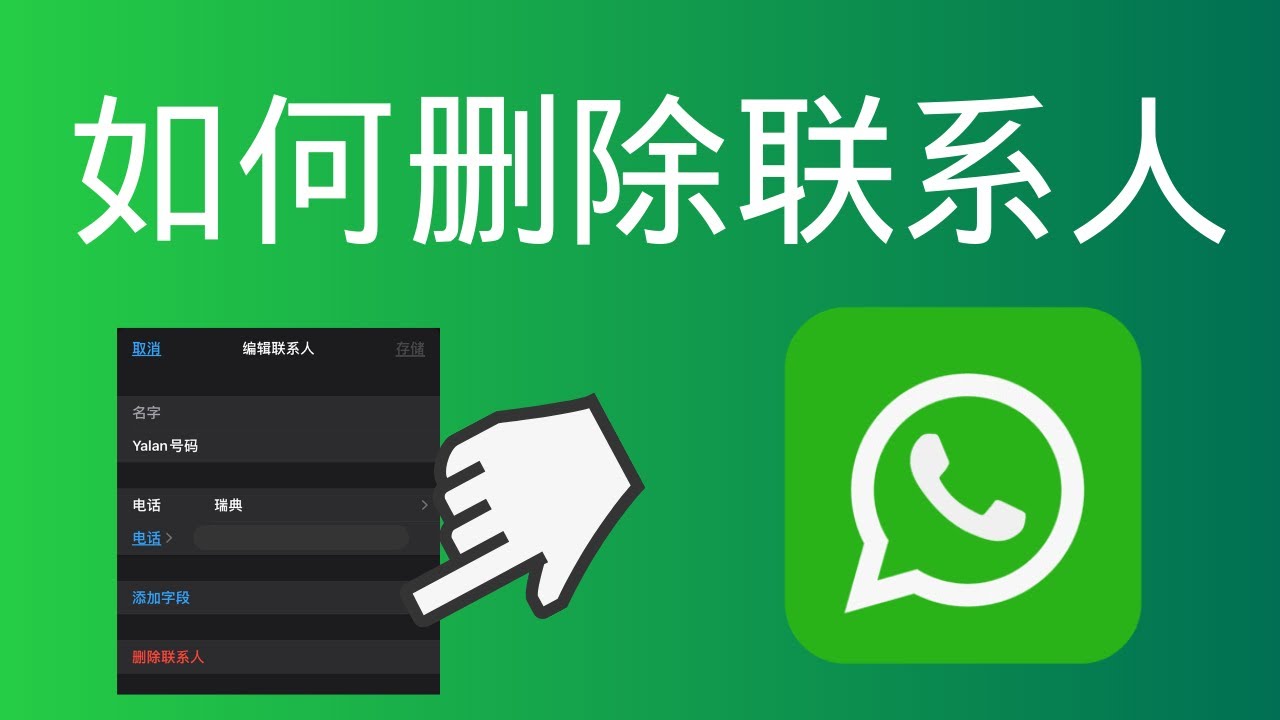 Does the other person know if you block them on WhatsApp
When you block someone on WhatsApp, they do not receive a notification, but they may notice some signs. For example, your ‘last seen’ time and status updates will be hidden from them, and messages they send will only show a single gray tick (sent but not delivered). According to 2024 statistics, about 35% of users […]