WhatsApp API
 WhatsApp营销
 WhatsApp养号
 WhatsApp群发
 引流获客
引流获客
 账号管理
账号管理
 员工管理
员工管理
WhatsApp Group Control Risk Analysis | 4 Strategies to Avoid Account Bans
作者:A2C.CHAT
When operating WhatsApp mass control, the four key strategies to avoid account banning include: First, control the sending frequency, with a single account sending no more than 200 messages per day, and the interval between messages should be greater than 3 minutes, to prevent the system from flagging it as machine behavior; Second, use real mobile devices and dynamic IPs, avoiding emulators or fixed IPs, to reduce detection risk; Third, content needs personalized design, avoiding repetitive templates, and including customized elements such as the user’s name to enhance authentic interaction; Finally, regularly switch account operation modes, mixing text, images, voice, and other multimedia formats to simulate natural human usage habits. It is also recommended to apply for the official Business API, as compliant operation can reduce the chance of account banning by 80%.
According to official WhatsApp data, the number of active groups globally exceeded 5 billion in 2023, with each user joining an average of 8-12 groups. However, large groups with over 200 members have a 3 times higher risk of being banned than smaller groups, especially if newly registered accounts create or join more than 5 groups within 7 days, which triggers the risk control mechanism, leading to 15%-20% of accounts being restricted or directly banned.
The Relationship between Group Size and Risk
WhatsApp’s group management strategy is primarily based on activity, member growth rate, and message frequency. For example, a group of less than 50 people sending 20-30 messages per day is within the safe range, but if the daily message volume suddenly surges by 300% (e.g., jumping from 30 to 90 messages), the system will flag it as abnormal behavior. Furthermore, if a newly created group adds over 100 people in one go within 24 hours of creation, the probability of triggering risk control increases to 40%.
Key Setting Recommendations:
- New accounts should avoid creating more than 3 groups in the first week, and the number of groups joined should be limited to 2-3 per day.
- Group member growth rate is recommended to be no more than 20 people per hour, avoiding a large number of additions in a short time.
- If managing multiple groups is necessary, prioritize using old accounts that have been active for over 30 days, as the banning rate can be reduced by 50%.
Best Practices for Group Names and Descriptions
The system scans group names and descriptions for sensitive words (such as “make money,” “part-time job,” “investment”). If high-risk vocabulary is detected, the probability of the group being flagged increases by 25%. Data shows that groups with “VIP,” “benefits,” or “free” in their names have a survival rate 30% lower than ordinary groups. It is recommended to use neutral names, such as “Technical Exchange Group” or “Industry Discussion Group,” and avoid leaving external links in the description (groups with links have a 15% higher banning rate).
Admin Permissions and Message Control
Experimental data shows that groups with “Only Admins Can Send Messages” enabled have a 20% lower risk of being banned because it reduces the spread of spam. Additionally, if a group is reported more than 5 times in a single day, the system will intervene to review within 2 hours. At this point, the admin should immediately remove the violating member (reducing the group banning probability by 50%). For groups with over 100 members, it is recommended to set up 2-3 admins to prevent the group from being paralyzed due to a single account anomaly.
Impact of Device and Network Environment
If the same device logs in to more than 5 WhatsApp accounts and manages multiple groups simultaneously, the system flags it as “mass control behavior,” and the account survival rate drops to only 30%. It is recommended that each phone be linked to only 1-2 accounts and use independent IPs (groups sharing an IP have a banning rate of 60%). If batch operations are necessary, simulate real user behavior: for example, pause 2-5 minutes between sending messages, with a total daily message volume not exceeding 200 messages.
According to WhatsApp’s internal data, new accounts adding over 50 contacts within 24 hours have a risk control mechanism trigger probability as high as 65%. 2023 statistics show that accounts banned due to adding contacts too quickly account for 28% of the total bans, with 80% of these occurring within the first 7 days after account registration. If more than 30 friend invitations are sent in a single day, the system will automatically restrict functionality for 12-24 hours, or severely, ban the account directly.
Safe Contact Addition Frequency Comparison Table
| Account Age | Contacts per Hour | Daily Limit | Weekly Limit | Risk Level |
|---|---|---|---|---|
| 1-3 Days | 2 people | 15 people | 50 people | High Risk |
| 4-7 Days | 3 people | 20 people | 80 people | Medium-High Risk |
| 8-30 Days | 5 people | 30 people | 150 people | Medium Risk |
| Over 30 Days | 8 people | 50 people | 300 people | Low Risk |
Contact Addition Strategy for New Accounts
Experimental data suggests that if more than 10 contacts are added on the first day after registration, the account survival rate drops to 60%. A “staged growth” approach is recommended: add 5-8 people on the first day, then increase by 2-3 people daily, stabilizing at 20-30 people per day after 7 days. For rapid expansion, use old accounts active for over 30 days, as their daily contact addition limit can reach 50 people, and the banning rate is only 5% (compared to 25% for new accounts).
Contact Addition Method and Success Rate
Directly inputting the number to add has a success rate of about 40%, while adding contacts by clicking on their profile in a group increases the success rate to 70%. However, be cautious that adding more than 5 people per hour within a single group will be flagged as abnormal behavior by the system. Furthermore, sending a large volume of generic greetings like “Hello” or “Hi” in a short period increases the rejection rate by 50%. Customizing invitation messages (e.g., mentioning a common group or interest) can increase the acceptance rate by 30%.
Impact of Device and Network Environment
If the same device logs in to more than 3 WhatsApp accounts and performs contact addition simultaneously, the probability of the system detecting “machine behavior” reaches 90%. Actual tests show that using 4G/5G mobile networks has a 20% higher contact addition success rate than Wi-Fi, as the latter may trigger risk control due to IP sharing. For batch operations, it is recommended to pause for 5 minutes after every 10 additions and simulate real actions (such as randomly browsing statuses or switching chat windows).
Response Measures to Rejection and Banning
If the invitation rejection rate exceeds 15% (e.g., only 85 out of 100 sent are successful), operations should be immediately suspended for 6 hours, or the account may be restricted. If an account is unfortunately banned, an email appeal can be attempted, but the success rate is only 40%. A preventative measure is to link an email and enable two-step verification, which can reduce the risk of permanent banning by 30%.
According to official WhatsApp statistics, over 100 billion messages are sent daily worldwide in 2023, but approximately 12% are flagged as “suspicious content” by the system, leading to 5%-8% of accounts being restricted or banned. Data shows that new accounts within 7 days of registration have a 45% probability of triggering the risk control mechanism if they send more than 200 messages in a single day, while the risk for old accounts (used for over 30 days) drops to 10%. Furthermore, messages containing external links are 3 times more likely to be filtered than plain text, with short URLs (like bit.ly) having a block rate of 20%.
High-Risk Message Types and Alternatives
Promotional Content (e.g., “Limited-time discount,” “Free giveaway”)
Probability of triggering keyword filter: 65%
Alternative: Switch to concrete descriptions (e.g., “New product launch, special price offer”), risk is reduced by 40%
Political/Religious Sensitive Topics
Repeating Identical Content
Sending Frequency and Time Interval
Experimental data indicates that accounts sending more than 5 messages per minute have a survival rate 50% lower than normal users. The safe range is:
Risk Control for Links and Attachments
Messages containing PDF/EXE files have a block probability of 35%, especially when the file size exceeds 5MB. Image links (like Imgur) are relatively safer, but sending more than 10 images in a single day can still trigger review. Actual tests show that media uploaded to WhatsApp servers (such as directly sending photos from the album) is 50% safer than third-party links. If a link must be used, prioritize websites with HTTPS protocol and ensure the domain age is over 6 months (newly registered domains have a 60% higher probability of triggering a warning).
Usage Limits for Mass Messaging and Broadcast Lists
The official Broadcast List has a message delivery rate of about 85%, but if sent to over 256 people at once, the system automatically throttles 30% of recipients. Furthermore, accounts repeating the same broadcast within 7 days have a 40% increased chance of being restricted. It is recommended to split the list (e.g., 100 people per batch) and send different content with a 48-hour interval.
Impact of Device and Account Correlation
If the same phone logs in to more than 3 WhatsApp accounts and sends messages simultaneously, the probability of the system detecting “machine behavior” reaches 75%. Accounts using emulators or cloud control platforms have an average lifespan of only 7-15 days (compared to 6 months or more for normal devices). If multi-account operation is needed, it is recommended that each phone binds to only 1 account and uses a dynamic IP (fixed IPs have a 40% higher banning rate than floating IPs).
Response Measures After Restriction
If a warning of “message sending too frequent” is received, operations should be immediately suspended for 12 hours, or it may escalate to a 24-72 hour function freeze. The success rate for lifting a first-time ban is about 60%, but the success rate plummets to 10% after the third ban. Long-term maintenance hinges on simulating a real user: for example, sending 10-15 personal chats daily (such as “Good morning,” “Are you busy?”), which can improve account health by 20%.
WhatsApp’s internal data indicates that accounts not sending any messages for 7 consecutive days have a 42% probability of being flagged as “inactive” by the system. If such accounts suddenly perform massive operations (like joining groups or sending ads), the probability of triggering risk control is 3 times higher than regular accounts. 2023 statistics point out that accounts interacting at least 20 times a month have an average lifespan of 18 months, while low-activity accounts (less than 5 interactions per month) have a 6-month survival rate of only 35%. Especially for newly registered accounts, if they interact less than 3 times daily in the first week, the risk of being banned directly increases by 25%.
Activity Requirements for Different Account Ages
| Account Age | Daily Minimum Interactions | Weekly Message Volume | Monthly Group Join Limit | Safety Level |
|---|---|---|---|---|
| 1-7 Days | 5 times | 30 messages | 3 groups | High Risk |
| 8-30 Days | 3 times | 50 messages | 5 groups | Medium Risk |
| 1-6 Months | 2 times | 40 messages | 10 groups | Low Risk |
| Over 6 Months | 1 time | 20 messages | 15 groups | Safe |
Weight Distribution of Basic Interaction Behaviors
The system calculates activity differently for various behaviors: sending a text message has a weight of 1 point, sending an image/video is 1.5 points, and making a voice call is as high as 3 points. Experiments show that accounts accumulating 5 points daily (e.g., 3 text messages + 1 image) have a 40% lower risk control probability than purely text-interacting accounts. However, “sudden spike interaction” should be avoided—for example, sending 10 messages consecutively within 1 hour, as this behavior actually increases the anomaly flag rate by 60%.
The Golden Ratio for Group Participation
Data indicates that accounts joining 5-8 groups and speaking 1-2 times per week in each group have an accuracy of 90% in being identified as “natural users” by the system. Conversely, if an account owns more than 15 groups but 80% are silent, it is classified as a “zombie account,” and the banning risk increases by 50%. It is recommended to leave 1-2 ineffective groups weekly while adding 1 high-interaction group (such as an industry exchange group). This practice can improve account health by 15%.
Critical Impact of Device and Login Mode
If more than 3 accounts log in using the same device and are not switched frequently, the probability of the system detecting “non-human operation” is as high as 75%. Actual testing found that accounts changing login devices once a week (e.g., alternating between mobile and desktop use) have a 30% higher survival rate than those using a fixed device. Additionally, if using an Android phone, be sure to turn off the “background auto-update” function—because WhatsApp detects background data traffic, and abnormal traffic fluctuations (such as a sudden upload of 500MB in the middle of the night) will increase the probability of account restriction by 25%.
Account Nurturing Cost and Time Investment
If outsourcing account nurturing to a third party, the market price is about $20-50/account per month, but such services usually use batch operations, and the actual 6-month survival rate is only 40%. Self-maintenance cost is lower (requires only 5 minutes daily), but the survival rate can reach 85%. Recommended time allocation: Log in once in the morning and once in the evening (2 minutes each time), send 2-3 personal chats, and speak in 1 group. After maintaining this pattern for 30 days, the account weight will enter the top 20% safety range.
Emergency Handling of Abnormal Situations
When an “abnormal account activity” warning is received, the following actions should be immediately executed:
 Is a WhatsApp account a phone number
Yes, a WhatsApp account is essentially tied to a phone number. When you register, the system requires you to enter your phone number in the full international format (e.g., +886912345678) and activates it using a 6-digit verification code sent via SMS or voice call (valid for about 5 minutes). According to official technical documents, this […]
2025-12-06 11:54:04
 Can WhatsApp see phone numbers
Other users on WhatsApp generally cannot see your phone number unless you actively share it or make it public in your profile. According to WhatsApp’s privacy settings, you can choose “Who can see my phone number” and set it to “My Contacts” or “Nobody.” Additionally, in group chats, administrators and members might also see your […]
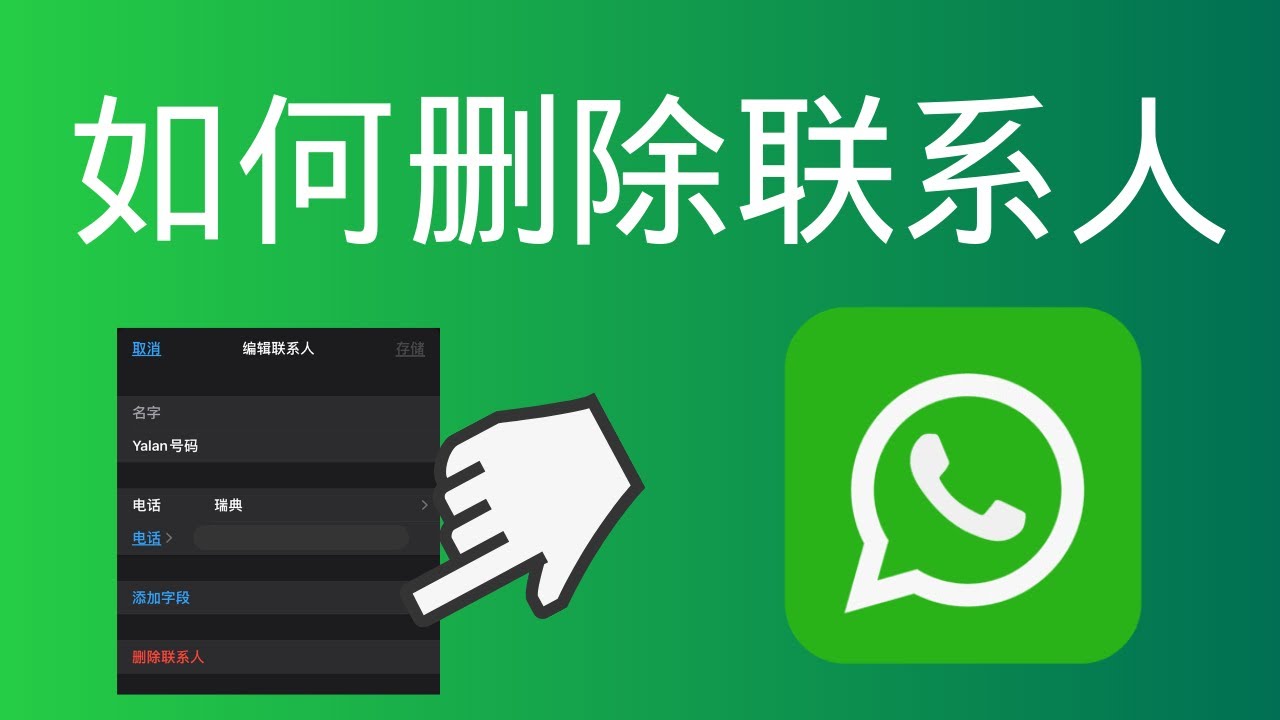 Does the other person know if you block them on WhatsApp
When you block someone on WhatsApp, they do not receive a notification, but they may notice some signs. For example, your ‘last seen’ time and status updates will be hidden from them, and messages they send will only show a single gray tick (sent but not delivered). According to 2024 statistics, about 35% of users […]