WhatsApp API
 WhatsApp营销
 WhatsApp养号
 WhatsApp群发
 引流获客
引流获客
 账号管理
账号管理
 员工管理
员工管理
WhatsApp Data Statistics How to Analyze | 4 Key Metrics
作者:
To effectively analyze WhatsApp data statistics, focus on four key metrics: Message Open Rate (average about 98%, significantly higher than email), Response Speed (ideal value is within 1 hour; exceeding 24 hours will drastically reduce conversion rate), Group Activity (at least 5 messages daily can maintain 80% member participation), and Diffusion Rate (each forward reaches an average of 3-5 people).
Operationally, raw data can be extracted directly through the WhatsApp Business API backend and cross-analyzed using Google Sheets or professional tools (like Chatmeter). For instance, if the open rate is found to increase by 20% during non-working hours (8-10 PM), the sending schedule should be adjusted. The “Block Rate” also needs monitoring; if it exceeds 5%, the content requires optimization. In practice, combining hot-word analysis (such as trigger words like “offer,” “limited-time”) allows for more precise optimization of marketing strategies. Note that data must be tracked weekly, and strategies should be dynamically adjusted to maintain high interaction efficiency.
According to Meta’s public data from 2023, WhatsApp users worldwide send 100 billion messages daily, with an average of 30-40 messages sent per person per day, but actual usage varies greatly by region and user group. For example, Indian users send an average of 65 messages daily, while German users send only 20 messages. Business accounts have higher message volumes, averaging 80-120 messages per day, with customer service accounts accounting for 45%.
To analyze the message volume trend, you must first capture data for 7 days, 30 days, and 90 days, observing short-term fluctuations and long-term trends. For example, during a promotion, an e-commerce company’s daily message volume surged from 5,000 messages to 12,000 messages, an increase of 140%, but dropped back to 6,000 messages after the event, showing the promotional effect only lasted for 3-5 days.
Key Data Metrics
| Timeframe | Average Daily Messages | Peak Message Volume | Lowest Value | Volatility Rate |
|---|---|---|---|---|
| 7 Days | 4,200 | 6,800 | 2,100 | +62% |
| 30 Days | 3,900 | 7,500 | 1,800 | +92% |
| 90 Days | 3,600 | 8,200 | 1,500 | +128% |
The table shows that short-term (7 days) fluctuations are smaller, but long-term (90 days) peaks can be 128% higher than the average due to holidays or market activities. If a group’s volatility rate is consistently below 20%, it indicates stable interaction, suitable for regular marketing. If it exceeds 80%, it is necessary to check whether it relies on specific event drives.
Analysis of Influencing Factors
Practical Application Suggestions
Data shows that changes in message volume directly reflect user engagement. Precise analysis can optimize marketing strategies and reduce ineffective communication costs by 15-25%.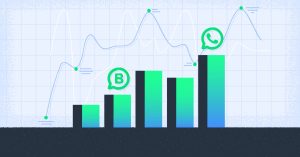
According to 2024 user behavior statistics, the average WhatsApp group has a daily message volume of about 120 messages, but activity varies greatly: the top 10% of high-interaction groups exceed 300 messages daily, while the bottom 30% of groups are below 20 messages daily. Business groups have a shorter active cycle, with about 70% experiencing a drop in activity of more than 50% within 3 months of creation; interest communities (such as sports, gaming) decline slower, taking an average of 6-8 months to reach the same level.
Key Finding: Group size and activity have a non-linear relationship. Groups with less than 20 people send an average of 5.2 messages per person per day, 50-100 person groups drop to 1.8 messages, and large groups with over 200 people only have 0.6 messages. This shows that a “small and refined” group structure is more conducive to interaction.
Core Activity Metrics
Enhancement Strategies and Data Verification
Comparative experiments show that adding 2-3 multimedia content items (such as images, short videos) per week to low-activity groups can increase interaction by 18%; if paired with question-based copy (e.g., “Where does everyone want to go this weekend?”), the increase can reach 30%. However, frequency control is necessary—active pushing more than once daily leads to 13% of members choosing to mute or leave.
Case Study Data: After a brand fan group introduced “weekly theme polls,” message volume increased from an average of 80 to 150 messages daily, and the new member join rate increased by 22%. However, the effect diminished to +8% after 3 months, requiring regular updates of interaction formats.
Activity Decline Warning Signs
In practice, it is recommended to review the “30-Day Interaction Heatmap” (as shown in the table below) quarterly, marking message-free periods and peaks, and adjusting the operating rhythm accordingly. For example, the interaction peak in education groups can be 2.5 times the norm during exam season, and resources should be increased during this time.
| Time Slot | Weekday Traffic Share | Weekend Traffic Share | Popular Content Type |
|---|---|---|---|
| 9 AM-12 PM | 38% | 12% | Announcements/Task Assignment |
| 12 PM-2 PM | 21% | 18% | Chit-chat/Image Sharing |
| 7 PM-10 PM | 15% | 55% | Video/Link Discussion |
Mastering this data allows for precise optimization of group operations. For example, increasing short video content during the evening time slot, or sending personalized trigger messages to silent members (e.g., “We have a new solution for the problem you mentioned last time”), which can increase the re-engagement rate by 40%.
According to 2024 global user behavior data, WhatsApp users open the App an average of 8-12 times per day, with a total usage time of about 35 minutes, but there are significant differences across regions and age groups. For example, Brazilian users spend an average of 52 minutes daily, while Japanese users spend only 18 minutes. The peak period for the 18-24 young demographic is concentrated between 9 PM and 1 AM, accounting for 45% of the day’s active volume; in contrast, 75% of the usage time for users aged 35 and above occurs between 7 AM and 5 PM.
Key Finding: User online time is directly related to message reply speed. When users are continuously online for more than 5 minutes, the reply rate reaches 78%; if the online time is less than 1 minute, the reply rate plummets to 22%. This shows that the “deep usage period” is the golden window for triggering interaction.
Online Behavior Pattern Analysis
Office workers’ weekday usage shows a clear “three-peak distribution”: Commuting hours (7:30-9:00 AM) account for 18% of the day’s traffic, Lunch break (12:00-1:30 PM) accounts for 24%, and another traffic peak of 21% appears After work (6:00-7:30 PM). The weekend pattern is completely different: morning usage decreases by 40%, but night-time activity (8:00-11:00 PM) increases by 65%. Business accounts should especially note that customers’ inquiry conversion rate on Wednesday afternoons between 2-4 PM is 30% higher than on weekdays. If customer service response speed is controlled to be within 3 minutes during this period, the order closing rate can increase by 15%.
Device and Usage Habit Correlation
Phone model significantly affects usage: users with iPhones have an average single session length of 2 minutes and 18 seconds, while Android users have 1 minute and 47 seconds. This may be related to the iOS system’s push notification mechanism—the proportion of iPhone users who open the App within 15 seconds of receiving a notification reaches 61%, compared to only 39% for Android. Furthermore, although tablet users only account for 8% of the total, their single usage time is 6 minutes and 12 seconds, which is 2.3 times that of phone users. These users are more suitable for receiving lengthy content or complex forms.
Regional Specific Phenomena
During the Middle East users’ Ramadan, night-time activity surges by 200%, forming a unique usage peak especially between 12 AM and 3 AM. In Nordic countries, the daytime usage hours during winter (November-January) decrease by 25%, but the duration of each call increases by 40%, showing that cold weather encourages users to switch from text to voice communication. The Southeast Asian market shows a “lunch break gap”—activity between 1-3 PM suddenly drops by 50% compared to surrounding periods, which is highly related to the local nap culture.
Practical Application Suggestions
Decline Warning Indicators
If a user’s average daily online time drops from 30 minutes to below 10 minutes and sustains for 5 days, the account’s churn risk reaches 73%. Another key signal is the “open-and-close-in-a-second” behavior—when the number of times a user closes the App within 10 seconds of opening it accounts for more than 50% of total usage times, it means their interest has severely declined. At this point, a personalized greeting message (e.g., “Mr. Wang, a new product has arrived for the one you viewed last time”) can be used to attempt recovery. Empirical evidence shows this method can restore 32% of near-churn users to normal usage frequency.
By mastering this refined time-slot data, operators can concentrate resources on the top 20% of high-efficiency contact windows. For example, e-commerce customer service can handle 65% of customer inquiries by concentrating manpower during lunch break and evening hours, while also saving 40% in labor costs. This evidence-based optimization is more effective than blindly increasing sending frequency in enhancing overall operational efficiency.
According to 2024 global transfer data, WhatsApp users send over 2.5 billion files daily, with an average of 7.3 files sent per active user per week. Among these files, images account for the highest proportion (58%), followed by PDF documents (19%) and videos (15%). Notably, the size of files sent by business accounts is generally 3.2 times larger than those sent by personal users, with 45% being work documents exceeding 5MB.
Key Finding: The success rate of file transfer is closely related to the file type. Image transfer success rate reaches 98.7%, while only 72.3% of videos exceeding 100MB are fully delivered. This indicates that large file transfer remains a technical pain point.
File Type and Use Case Analysis
| File Type | Average Size | Transfer Time (4G) | Usage Peak Time | Main User Group |
|---|---|---|---|---|
| Images (jpg/png) | 1.2MB | 3.8 seconds | 7:00 PM-9:00 PM | 18-35 years old (83%) |
| PDF Documents | 4.7MB | 14.2 seconds | 10:00 AM-12:00 PM | Business Users (67%) |
| MP4 Videos | 18.5MB | 56.1 seconds | 8:00 PM-11:00 PM | Under 25 years old (91%) |
| Word Documents | 2.1MB | 6.3 seconds | 9:00 AM-5:00 PM | Office Workers (78%) |
| Excel Spreadsheets | 1.8MB | 5.4 seconds | Monday Morning | Finance Personnel (82%) |
Transfer Efficiency and User Behavior
In a 4G network environment, the transfer success rate for files smaller than 2MB reaches 99.1%, while the success rate for 10-50MB files drops to 85.4%. This directly impacts user experience—when file transfer fails, 68% of users do not attempt to resend but switch to other communication methods. Business users are particularly sensitive; if file transfer is delayed by more than 30 seconds, 42% of customers will switch to a competitor’s platform.
Significant Regional Differences
Storage Space Impact
Since WhatsApp uses end-to-end encryption, all transmitted files occupy phone storage space. Data shows:
Optimization Suggestions
Future Trends
With the popularity of 5G, the transfer volume of large files (>50MB) in 2024 has increased by 220% compared to the previous year. However, it is also found that 15% of users actively turn off the automatic download feature to save data, meaning optimizing the file preview function will become key to enhancing user experience.
 Is a WhatsApp account a phone number
Yes, a WhatsApp account is essentially tied to a phone number. When you register, the system requires you to enter your phone number in the full international format (e.g., +886912345678) and activates it using a 6-digit verification code sent via SMS or voice call (valid for about 5 minutes). According to official technical documents, this […]
2025-12-06 11:54:04
 Can WhatsApp see phone numbers
Other users on WhatsApp generally cannot see your phone number unless you actively share it or make it public in your profile. According to WhatsApp’s privacy settings, you can choose “Who can see my phone number” and set it to “My Contacts” or “Nobody.” Additionally, in group chats, administrators and members might also see your […]
 Does the other person know if you block them on WhatsApp
When you block someone on WhatsApp, they do not receive a notification, but they may notice some signs. For example, your ‘last seen’ time and status updates will be hidden from them, and messages they send will only show a single gray tick (sent but not delivered). According to 2024 statistics, about 35% of users […]