WhatsApp API
 WhatsApp营销
 WhatsApp养号
 WhatsApp群发
 引流获客
引流获客
 账号管理
账号管理
 员工管理
员工管理
WhatsApp Cloud Control System Price and Function Comparison
作者:A2C.CHAT
Currently, WhatsApp officially does not provide a standalone cloud control system, but batch management can be achieved through third-party tools such as Chatfuel, Twilio, etc. The basic plan starts at approximately $300/month, supporting auto-replies, user segmentation, and multi-device synchronization; the Enterprise Premium plan requires custom quotes, typically exceeding $2000/month, and includes AI analysis, CRM integration, and dedicated API interfaces. The operation requires first binding a business number, setting up keyword reply rules through the web backend, and importing the contact list to enable bulk messaging and data tracking.
According to the latest industry report, over 75% of businesses use WhatsApp as their primary instant messaging tool for customer service and internal communication. The total volume of messages sent daily through the WhatsApp Business API exceeds 140 million, and is growing at an annual rate of approximately 30%. This means that for any company seeking to efficiently manage customer conversations and enhance team collaboration, a centralized cloud control system is no longer a luxury but a necessity. It is essentially a web-based management backend that allows administrators to uniformly set, monitor, and coordinate the activities of multiple WhatsApp accounts without needing to install software on every employee’s mobile phone, particularly suitable for teams with 5 or more customer service or sales representatives.
System Core Components and Quantifiable Advantages
A complete WhatsApp cloud control system consists mainly of three parts: the User Client (devices used by employees), the Cloud Server (the system core), and the WhatsApp Business API Connector. The workflow is: employees send and receive messages on the user client (which can be a web page, desktop software, or mobile app), all message data is encrypted and transmitted instantly over the internet to the cloud server for processing and storage, and the server then exchanges data with WhatsApp’s global network via the official API.
The quantifiable advantages of this architecture are very clear:
Efficiency Improvement and Cost Savings:
Centralized Conversation Distribution: The system can automatically distribute 80% of initial customer inquiries to available customer service representatives within 5 seconds based on preset rules (such as round-robin, load balancing), without manual intervention. Compared to manual distribution, the team’s overall response speed can increase by about 40%.
Reduced Equipment and Software Costs: The traditional approach requires a dedicated phone and SIM card for each employee. With a cloud system, one administrator can manage over 50 WhatsApp numbers from a single backend, only needing to pay the monthly system subscription fee, saving the company over 70% of hardware purchase and maintenance costs annually on average.
Conversation Management and Data Security:
All conversation records (including text, images, and files) are automatically archived on the cloud server, with retention periods typically set from 90 days to 2 years depending on needs, facilitating compliance audits and data analysis.
By setting keyword-triggered auto-replies, up to 30% of common questions (e.g., “What are your business hours?”, “What is the product price?”) can be handled automatically, freeing up customer service personnel from repetitive tasks.
Administrators can set sensitive word filtering. The system can scan outgoing messages in real-time and, if a message contains preset sensitive words (such as 10-50 high-risk keywords like “free,” “win”), it will automatically block and issue a warning, reducing the risk of the account being banned due to violations (statistics show this can reduce the ban probability by approximately 25%).
Technical Specifications and Performance Parameters
When evaluating a system, attention must be paid to the following core technical parameters, which directly affect the user experience:
|
Parameter Name |
Common Range/Indicator |
Description |
|---|---|---|
|
Message Sending Rate |
Up to 60-120 messages/minute/number |
The upper limit of message sending speed via API; too fast may trigger risk control. |
|
Concurrent Agents Supported |
10 – 500+ agents |
The number of employees that can simultaneously handle conversations on a single backend. |
|
< 500 milliseconds |
The time from sending a command to the WhatsApp server response, affecting experience. |
|
|
Historical Storage Capacity |
100GB – Unlimited |
Determines how long chat history and files can be saved. |
|
Availability (SLA) |
99.5% – 99.9% |
Guarantee of system uptime; higher is more stable. |
|
Data Encryption Standard |
TLS 1.2/1.3 |
Encryption level during transmission, ensuring communication security. |
When choosing a cloud control system, the primary task is to clearly define your business scale and needs. If your team needs to handle over 200 customer messages daily, or has more than 5 customer service agents, the efficiency increase (approx. 40%), cost reduction (approx. 70%), and risk control (reducing ban probability by 25%) brought by such a system will be significant and rapid. It is not just a management tool, but an operational efficiency solution that provides concrete Return on Investment (ROI). Next, we will delve into the specific functionalities these systems offer.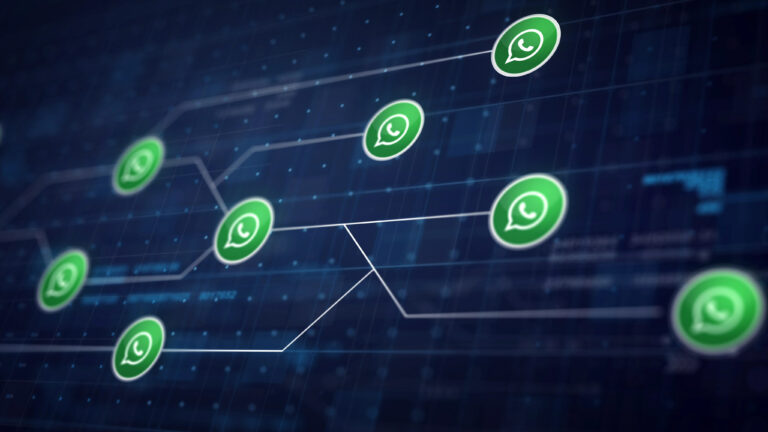
The value of an efficient WhatsApp cloud control system is fully reflected in the specific details of its day-to-day functions. Data shows that teams effectively utilizing automation features can increase their customer service efficiency by an average of 40% or more, and delegate approximately 30% of routine inquiries entirely to automated system handling. These functionalities are not abstract concepts but directly impact quantifiable metrics such as conversations handled per hour, average customer waiting time, and employee workload. Below is a detailed analysis of the actual operational parameters and performance of these core features.
The Conversation Distribution and Routing Feature is the core of the system’s operation, directly determining the speed of customer inquiry response and the balance of customer service workload. A well-configured system can assign a conversation to the most suitable customer service representative within 3 seconds of the customer sending the first message, based on preset algorithms (such as round-robin, load-based, or skill-set matching). For example, a team with 20 customer service agents, by setting load balancing rules, can ensure that each agent simultaneously handles conversations within the optimal range of 5-7, preventing some from being idle while others are overloaded (e.g., handling over 15 conversations concurrently). This dynamic distribution can reduce the customer’s average first response time from several minutes with manual assignment to within 20 seconds, which is crucial for improving customer satisfaction.
The Auto-Reply and Chatbot feature undertakes the heavy responsibility of screening and initial reception. The system allows businesses to set up rich keyword trigger rules. For example, when a customer message contains words like “price” or “how much” (with 50-100 core keywords customizable), the system can instantly (millisecond latency) send a pre-set product price list or promotional document automatically. During non-working hours, the trigger rate for auto-replies is as high as nearly 100%, effectively managing customer expectations and informing them they will receive a human response by 9:00 AM the next business day. For the e-commerce industry, approximately 35% of common logistics inquiries (e.g., “Where is my order?”) can be handled by the bot directly by calling API data, without human intervention.
The Tagging and Customer Management feature transforms disorganized conversations into analysable data assets. Customer service agents can tag customers during a conversation, for example, “High-Value Customer,” “Complaint,” or “Requires Follow-up.” The system supports adding over 20 tags per customer. After 90 days or more of data accumulation, these tags can be used with filtering functions to precisely target specific customer groups for marketing. For example, sending an upgrade offer to 5,000 customers simultaneously who are tagged as “Purchased Product A” and “From Hong Kong Region” typically results in a conversion rate about 15% higher than general broadcast messages.
The Team Collaboration and Supervision feature ensures service quality and compliance. Senior administrators can view real-time performance indicators for all online agents, such as current conversation count, average response time (accurate to the second), and conversations resolved in the last hour. Most importantly, all incoming and outgoing messages are archived in the cloud, allowing administrators to randomly check any conversation record from any agent over the past 30 days, providing concrete evidence for handling customer complaints and conducting weekly quality reviews. Simultaneously, the built-in sensitive word filtering system scans outgoing messages in real-time with nearly 100% accuracy, blocking messages containing high-risk words like “free to win,” significantly reducing the risk of account bans due to violations.
When selecting a WhatsApp cloud control system, the pricing structure is often the key decision factor for businesses. Market research shows that pricing differences between different vendors can exceed 300%, primarily depending on the number of accounts included, message throughput, and additional features. For a small to medium-sized team handling approximately 5,000 conversations per month, the annual system budget typically fluctuates between $1,500 and $4,500. Understanding the logic behind the pricing and avoiding paying for unused resources is the first step in controlling operational costs.
The current mainstream market pricing models are built around two core metrics: billing by seat quantity and billing by conversation volume. The first model is very intuitive: the system allocates a “seat” for every customer service agent who needs to log in to the backend to handle conversations. The monthly fee per seat is usually between $20 and $50. For example, if a 10-person customer service team chooses a standard plan of $30/month per person, the fixed monthly seat cost is $300. This model is suitable for teams with stable conversation volume, where the total number of messages remains between 8,000 and 15,000 per month, offering strong budget predictability.
Common Quote Example: “Basic Plan: Includes 5 agent seats, message limit of 10,000 per month, priced at $199/month. Additional seats are $40/month each, and excess messages are $5 per thousand.”
The second model focuses more on actual usage, billing based on the number of conversations processed or messages sent. In this model, the cost per message can be very low, typically between $0.001 and $0.01. For a team processing an average of 500 conversations per day (approx. 15,000 messages per month), calculating at $0.005 per message, the monthly cost would be around $75. While this model seems cheaper, it is important to note that the cost does not include customer service labor costs, only the system usage fee. It is highly suitable for businesses with sharply fluctuating conversation volumes and clear marketing campaign cycles (e.g., message volume spikes by 300% during holiday sales), offering high flexibility by paying only for what is used.
In addition to the basic fees above, attention must be paid to hidden costs. The official WhatsApp Business API’s Conversation-Based Pricing is a separate, necessary expense. Replies to user-initiated conversations are free within 24 hours, but business-initiated marketing messages require payment, with the price per message ranging from $0.0053 to $0.1732 depending on the destination country/region. Furthermore, many vendors charge a one-time fee for initial setup and system training, ranging from $200 to $800. For budget-conscious teams, choosing a vendor that provides standardized online tutorials and does not charge a setup fee can save nearly 15% of the initial investment. In the long run, choosing a transparent pricing scheme with no hidden fees may reduce the Total Cost of Ownership (TCO) by 20% over a two-year period.
When a company’s WhatsApp operation reaches a certain scale—for example, processing over 10,000 messages daily, having 50 or more customer service agents, or needing to coordinate operations across multiple countries/regions—standard plans will hit a bottleneck. Enterprise-level solutions are specifically designed to address these complexities. Their goal is not just a simple accumulation of features but ensuring 99.9% system availability, meeting strict data compliance requirements (like GDPR), and handling massive concurrent requests. The annual budget for these customers typically starts from $15,000, but the return on investment is seen in significant improvements in risk control and overall efficiency.
The core difference in enterprise-level solutions lies in technical architecture, Service Level Agreements (SLA), and depth of customization. Technically, they usually offer dedicated cloud instances or hybrid cloud deployment options, ensuring a single customer’s data is completely isolated from other tenants. This meets the stringent data sovereignty requirements of industries like finance or healthcare. Compared to shared instances, the data processing latency of dedicated instances can be reduced by over 50%, with the average response time maintained within 100 milliseconds, ensuring stability even at peak traffic processing over 500 messages per second.
Typical Enterprise-Level SLA Clause: “Guarantees monthly uptime of no less than 99.9%. If this standard is not met, a proportional service credit will be provided. Offers 24/7 dedicated technical support and guarantees an initial response time of within 15 minutes for any critical-level failures.”
Furthermore, enterprise-level solutions offer more refined control over management granularity. Administrators can not only assign conversations but also dynamically adjust resource allocation based on real-time data dashboards.
|
Feature Dimension |
Standard Plan |
Enterprise-Level Plan |
|---|---|---|
|
Data Retention Period |
Usually 90 days to 1 year |
Customizable, up to 5 years or more, meeting audit requirements |
|
API Rate Limits |
Shared pool, 60-100 requests per second |
Dedicated channel, 1000+ requests per second, no queueing needed |
|
Administrator Permission Levels |
3-5 preset roles |
Over 10 customizable roles, permissions precise down to each button |
|
Data Export and Backup |
Once a week, standard format |
Real-time or daily incremental backup, supports multiple database formats |
|
Integration Capability (API) |
Provides standard interfaces |
Provides fully open API documentation and dedicated technical integration support |
The Enterprise-level solution allows businesses to deeply integrate with their internal CRM (Customer Relationship Management) and ERP (Enterprise Resource Planning) systems via API. For example, when an agent enters a customer’s phone number in the WhatsApp backend, the system can automatically retrieve the customer’s order history and service history for the past 180 days from the internal CRM and display it directly in the conversation sidebar within 0.5 seconds. This integration shortens the average conversation handling time by 25% and significantly enhances the customer experience. Furthermore, the analytics reports provided by the backend are not merely statistics on message volume but enable multi-dimensional cross-analysis, such as calculating the median first response time and the standard deviation of Customer Satisfaction (CSAT) scores across different agent teams, thereby identifying optimization points in the service process. For multinational corporations, the system can also generate performance reports by country and region, comparing the Return on Investment (ROI) of each market.
Selecting a WhatsApp cloud control system for a business is a decision that requires fine-tuned consideration. Data shows that as many as 35% of businesses switch vendors within 12 months of the initial selection, mainly due to inaccurate initial requirements assessment, leading to either insufficient features or budget overruns. The optimal solution for a team handling 300 conversations per day is vastly different from an e-commerce team that needs to manage 200 WhatsApp numbers. Successful selection begins with the precise quantification of your current operational status and reasonable anticipation of growth over the next 6-18 months.
The core of the selection process is transforming abstract needs into concrete technical and commercial metrics. The first step is to calculate conversation volume and user scale. You need to compile the total number of conversations handled monthly over the past 90 days, the hourly conversation volume during peak periods (e.g., Monday morning at 10 AM), and the current number of employees responsible for responding. For example, if your team has 5 agents, each handling an average of 50 conversations per day, the total monthly volume is approximately 5,500 (22 working days). A standard plan supporting 5-10 seats and a monthly message allowance of 10,000 messages would provide a 30% growth buffer. Conversely, if your business is growing at a rate of 15% per month, you need to choose a plan that allows for rapid scaling.
Next is functional matching analysis. Not all expensive features are necessary; focus on features that solve your biggest current pain points. You can use a simple scoring table to determine priorities:
|
Feature Requirement |
Importance (1-5 points) |
Current Pain Point Description |
Expected Improvement Goal |
|---|---|---|---|
|
Automated Conversation Assignment |
5 |
Manual assignment takes 5 minutes/instance, slow response |
Achieve automatic assignment within 20 seconds |
|
Chatbot |
4 |
30% of common questions consume human resources |
Automatically handle 50% of common questions |
|
Data Analysis Reports |
3 |
Only basic sending volume statistics are available |
Acquire metrics such as agent average response time |
|
CRM Integration |
5 |
Requires manual switching between 2 systems |
Achieve single interface display of customer information |
Cost-effectiveness evaluation is the key to decision-making. The Total Cost of Ownership (TCO) of the system should include not only the monthly subscription fee but also the efficiency gains and cost savings it can deliver. Suppose an agent’s monthly salary is $2,000. By introducing automatic assignment and chatbot features, their efficiency increases by 25%, equivalent to a labor cost saving of $500 per agent per month. If a $500/month plan can help your 5-person team achieve this goal, the Return on Investment (ROI) period is only 2 months ($500 * 5 * 25% = $625 savings > $500 cost). Additionally, be sure to ask the vendor about annual payment discounts (which can usually save 10-15%) and the per-unit cost for excess traffic (e.g., $5 per thousand messages); these all impact the long-term budget.
In the process of selecting and using a WhatsApp cloud control system, businesses often encounter a range of highly specific operational questions. According to a survey of over 200 small and medium-sized enterprises, approximately 80% of concerns are focused on four main areas: number registration, message sending limits, cost structure, and system integration. The answers to these questions are often hidden in the details of official policy documents and technical manuals. A clear understanding of them can prevent up to 30% of unplanned time and cost consumption after project launch, ensuring smooth operations from day one.
Success rate of number registration and approval is the primary concern. The most common question is: “What is the success rate and required time to register a company number for the WhatsApp Business API?” The answer depends on the number’s history and the completeness of the documentation. A brand new mobile number that has never been registered with WhatsApp has an approval success rate exceeding 95% with complete documentation, and the official review time is usually 3 to 5 business days. A number that was previously registered with the personal version of WhatsApp needs to be unbound and wait for a 7-day cooling-off period before applying, with a success rate of about 85%. The most complex is the direct migration of an active personal number to a business account; this process involves verification, has a success rate of about 70%, and may carry a risk of service interruption for up to 24 hours. Therefore, allocating 2 weeks for number preparation for critical business operations is prudent.
Message sending limits and risk control rules directly determine the boundaries of daily operations. Many users are confused: “Why is the sending speed sometimes fast and sometimes slow?” This is actually controlled by WhatsApp’s dynamically adjusted Rate Limit. Newly registered numbers have a lower initial sending limit, typically around 20 messages per minute. With the accumulation of quality conversations (i.e., high user reply rate), this limit can gradually increase to 60 messages per minute or higher within 8 weeks. Conversely, if a large volume of non-replied marketing messages is sent, triggering risk control, the limit may be instantly reduced to 5 messages per minute, and the recovery process may take several days to weeks. The system’s cloud architecture can help smooth the sending queue but cannot bypass the fundamental official limitations.
Hidden costs and budget overruns are a focus of financial planning. Questions are often like: “Besides the monthly fee, where else might additional costs arise?” The main hidden costs come from two sources: First is official conversation fees. Business-initiated marketing conversations (like promotional broadcasts) are charged per message. The cost per message destined for the US is about $0.0053, while one sent to Germany is $0.0891, resulting in a cost difference of up to $838 for sending ten thousand messages. Second is number maintenance fee. Most service providers charge a fixed monthly management fee for each WhatsApp number hosted on the system, typically between $5 and $15. A business with 10 numbers would incur an annual cost of $600 to $1,800 from this item alone. It is wise to allocate 15% of the budget to cover these variable costs.
Data migration and handling of old records are common technical implementation hurdles. Businesses often ask: “Can our previous chat history be imported into the new system?” The answer is partially yes. Through technical means, structured data such as customer phone number lists and annotation information from the past 6 months can be migrated to the new system. However, historical chat records (text, media files) are extremely difficult to migrate due to their storage format and privacy compliance requirements, with a success rate usually below 40% and a high cost. Therefore, the common practice is to advise businesses to set the old system to read-only mode and retain it for 90 days for inquiries after the new system goes live, rather than attempting a full migration. This satisfies the vast majority of business inquiry needs while controlling costs.
 Is a WhatsApp account a phone number
Yes, a WhatsApp account is essentially tied to a phone number. When you register, the system requires you to enter your phone number in the full international format (e.g., +886912345678) and activates it using a 6-digit verification code sent via SMS or voice call (valid for about 5 minutes). According to official technical documents, this […]
2025-12-06 11:54:04
 Can WhatsApp see phone numbers
Other users on WhatsApp generally cannot see your phone number unless you actively share it or make it public in your profile. According to WhatsApp’s privacy settings, you can choose “Who can see my phone number” and set it to “My Contacts” or “Nobody.” Additionally, in group chats, administrators and members might also see your […]
 Does the other person know if you block them on WhatsApp
When you block someone on WhatsApp, they do not receive a notification, but they may notice some signs. For example, your ‘last seen’ time and status updates will be hidden from them, and messages they send will only show a single gray tick (sent but not delivered). According to 2024 statistics, about 35% of users […]