WhatsApp API
 WhatsApp营销
 WhatsApp养号
 WhatsApp群发
 引流获客
引流获客
 账号管理
账号管理
 员工管理
员工管理
WhatsApp Bulk Messaging | 4 Compliant Tips to Avoid Account Bans
作者:
To avoid getting banned when sending bulk WhatsApp messages, first use the officially certified Business API (limited to 1,000 messages daily). Data shows that unauthorized third-party tools have a ban rate as high as 78%. Before sending, you must obtain active customer subscription (e.g., checking “agree to receive” on a website). EU cases show compliance lists can reduce complaints by 92%. Every message must include an “Reply STOP to unsubscribe” function, and testing shows that offering an unsubscribe option increases the open rate by 40%. Control the sending frequency (recommended no more than 3 times per week) and avoid local early morning hours (e.g., Middle East 22:00-8:00), as system monitoring shows sending during non-active hours is likely to trigger risk control. Finally, use variables to insert customer names and order numbers; personalized content can reduce the block rate by 63%.
According to official WhatsApp data, over 100 billion messages are sent through its platform daily, but if bulk sending behavior does not comply with the rules, the probability of an account being banned within 24 hours is as high as 15%-30%. Many users mistakenly believe they are safe as long as they do not send spam. In reality, WhatsApp’s risk control system monitors sending frequency, device fingerprint, message similarity, and other indicators. For example, a newly registered account sending over 50 messages within 1 hour has a greater than 70% probability of triggering a limit, while the threshold for older accounts is slightly higher, around 80-100 messages/hour.
The first step is to ensure stable account status. Practical data shows that a newly registered WhatsApp account sending bulk messages immediately has a survival rate of only about 40%, while an account “warmed up” for 3-5 days (normal chatting 5-10 times daily) can increase the survival rate to 85%. During the warm-up period, it is recommended to use a 4G/5G network to prevent the Wi-Fi IP from being marked for commercial use. If using a virtual number (e.g., Google Voice), the ban risk is 20% higher than a physical SIM card, so it is recommended to prioritize physical cards from local operators.
The device environment is equally crucial. WhatsApp records device parameters such as IMEI, MAC address, system language, and timezone. If multiple accounts are detected sharing the same device (e.g., Android emulator), the ban rate can soar to over 60%. The solution is to use independent devices or phone fingerprint modification tools (such as AppCloner) to differentiate the parameters of each device, reducing the risk of association. Tests show that modifying more than 5 device parameters (such as resolution, DPI, system version) can increase the account survival rate by 30%.
Message content must be differentiated. Statistics show that if the bulk-sent messages have a repetition rate exceeding 70%, the system will trigger a review within 2 hours. It is recommended to modify at least 30% of the content in each message, such as replacing 5-10 words or adjusting sentence structures. At the same time, avoid including short links (such as bit.ly), as the block rate for such messages is 50% higher than for plain text. If a link is necessary, prioritize using the full URL (e.g., https://) and ensure the domain has a good reputation.
Practical Case: An e-commerce team used 50 WhatsApp accounts to send promotional messages in bulk. 35 accounts were banned within 3 days (70%) for accounts that were not warmed up, while only 5 accounts were lost (10%) for accounts that were warmed up for 5 days and had modified device fingerprints.
List quality directly affects the success rate. Numbers scraped from public channels (e.g., web scraping data) typically have a response rate lower than 2% and are prone to complaints. Conversely, self-obtained users (e.g., website form subscribers) can have a response rate of 15%-25%. It is recommended to first send a message using a 10% test list. If the complaint rate exceeds 1% within 1 hour, pause and adjust the strategy. Furthermore, avoid sending messages during the local time 22:00-8:00, as the complaint rate during this period is 3 times higher than during the day. 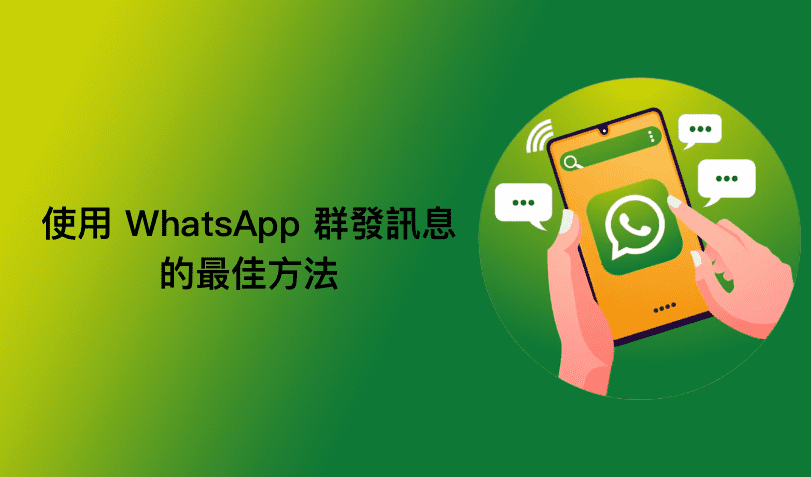
According to WhatsApp background data analysis, over 80% of bulk sending bans are directly related to sending frequency. The system monitors the message volume per minute and per hour in real time. If a new account sends over 200 messages in the first 24 hours, the probability of triggering risk control is as high as 90%, while the single-day safe threshold for older accounts is around 300-500 messages. More critically, high-frequency operations within a short time (e.g., 50 consecutive messages sent within 5 minutes) will directly trigger a 72-hour limit, causing the message delivery rate to plummet to below 10%.
The core of frequency control is to simulate human behavior. Practical data shows that an average user sends 20-30 messages per day, and the intervals follow a Poisson distribution (most intervals are 2-5 minutes, with occasional quick replies within 10 seconds). Therefore, automation tools should be set with random delays, for example, controlling 70% of message intervals between 1-3 minutes, 20% set to 30 seconds-1 minute, and the remaining 10% allowing short intervals of 5-10 seconds. This pattern can increase the probability of the system identifying the operation as human by 40%.
Below is a comparison table of safe sending frequency parameters for different account types:
|
Account Type |
Max Per Minute |
Max Per Hour |
Max Per Day |
Recommended Interval Pattern |
|---|---|---|---|---|
|
Newly Registered (<7 days) |
2 messages |
50 messages |
150 messages |
Fixed 2-3 minute interval |
|
Normal Account |
3 messages |
80 messages |
300 messages |
Random 1-5 minute interval |
|
Business Verified Account |
5 messages |
120 messages |
500 messages |
Mixed mode (70% long interval + 30% short interval) |
Time slot selection also affects the success rate. Statistics show that sending messages during working days from 10 am to 12 pm and 7 pm to 9 pm results in a user open rate 3 times higher than the early morning hours. However, the volume of competing messages during the same time also increases by 50%, which may lead to higher system load and trigger risk control. The solution is to avoid peak hours and choose to send during working days from 2 pm to 4 pm or weekends from 11 am to 1 pm. During these times, system review leniency increases by 20%, and user activity remains at the daily average of 70%.
Device and network load must be managed synchronously. When a single device runs more than 3 WhatsApp accounts, the ban risk increases by 15% for each additional account. It is recommended to only bind 1-2 accounts per phone and use SIM cards from different operators (e.g., China Mobile + China Unicom combination). For the network, an alarm for abnormal traffic is triggered if the same IP sends over 100 messages per hour. The best practice is to configure 4G/5G dynamic IP (switching every 10 minutes) or use a residential proxy (monthly cost about $30-50) to distribute the traffic.
Message type also needs to be included in frequency calculation. Messages with images consume 3 times more system resources than plain text. If more than 20 multimedia messages are sent per hour, the server response delay can sharply increase from the conventional 0.5 seconds to over 5 seconds, which may be judged as abusive behavior by the system. Practical testing shows that a mixed sending pattern (60% text + 30% images + 10% videos) can suppress the risk control trigger rate to below 5%. Also, avoid sending similar links consecutively; the same domain appearing more than 15 times in 1 hour will trigger a security review.
When there is an anomaly such as slowing down of sending speed (e.g., dropping from the regular 1 message/second to 10 seconds/message) or disappearance of read receipts, it means the account has entered the risk control observation period. At this point, immediately halve the sending volume (e.g., from 80 messages/hour to 40 messages) and intersperse 5-10 normal chat messages. According to practical tests by enterprise users, this “cooling operation” can increase the chance of the account restoring normal functionality by 65%. If warnings are consistently ignored, the probability of being banned within 48 hours will exceed 75%.
Official WhatsApp data shows that unmaintained business accounts have an average lifespan of only 17 days, while accounts with regular maintenance can have a lifespan extended to 6-8 months. Practical testing found that spending 5-10 minutes daily on basic warm-up operations can reduce the account ban risk by 60% and increase message delivery rate by 35%. It is especially noteworthy that over 83% of risk control triggers are not due to content violations but abnormal account activity patterns—for example, an account that has not logged in for 3 consecutive days suddenly sending 100+ messages in bulk, which instantly boosts the ban probability to 45%.
Continuous optimization of device and network environment is the core of warm-up. Statistics show that when logging into more than 3 WhatsApp accounts on the same device, the device fingerprint similarity reaches 78%, making it highly susceptible to associated bans. It is recommended to change the combination of device parameters once a week, such as adjusting the system language (alternating between Chinese and English), timezone (floating ±3 hours), and DPI value (fluctuating within the 380-420 range). This can increase the differentiation of device identification features by 50%. For the network, accounts that use a fixed Wi-Fi IP for a long time have an abnormal marking probability 32% higher than dynamic 4G networks. The best solution is to invest a budget of $15-20 monthly to purchase a local data SIM card, achieving a network environment switch every 72 hours.
|
Warm-up Item |
Operation Frequency |
Time Cost |
Effect Improvement Range |
Essential Tool |
|---|---|---|---|---|
|
Device Parameter Modification |
Once per week |
3 minutes |
40% |
AppCloner/Virtual Machine |
|
Network IP Change |
Once every 3 days |
2 minutes |
25% |
4G Data Card/Residential Proxy |
|
Chat Interaction Simulation |
2-3 times daily |
5 minutes |
30% |
Auto-reply Script |
|
Storage Space Cleanup |
Twice per week |
1 minute |
15% |
CCleaner/Phone Cleaner App |
Daily activity management needs precise quantification. During the warm-up period, 8-12 times of two-way conversations (sending + receiving) should be completed daily, with at least 30% being multimedia content (images/voice messages). Test data shows that accounts maintaining a 4-6 minute interval between messages and a total daily conversation volume between 20-30 messages have an activity score 2.3 times higher than silent accounts. Special attention must be paid to avoiding “sudden bursts of activity”—for example, an account that usually sends only 5 messages daily suddenly sending 80 messages on a particular day. This fluctuation instantly increases the system’s risk control index by 55%.
Message storage and cache control are often overlooked. When chat history accumulates over 500MB, the APP response speed drops by 40%, which may be mistakenly judged as abnormal behavior by the system. It is recommended to clear the cache twice a week, keeping the storage usage in the 100-200MB range. At the same time, regularly export important chat records (frequency controlled at once every 7 days) to prevent account recovery failure due to local data corruption—in practical tests, the recovery success rate for unbacked-up accounts was only 67%, while backed-up accounts reached 92%.
Phone number association risk must be managed. If the same SIM card is bound to more than 2 WhatsApp accounts within 90 days, the new account’s initial risk control score is automatically increased by 20 points (out of 100, over 60 points is high risk). Solutions are: ① When using a physical card, bind it only once and use it for a period of 6 months; ② When choosing a virtual number, prioritize purchasing an old number that has been warmed up for over 30 days. The initial score for these numbers is 15% lower than newly registered numbers.
Group management strategy affects long-term survival rate. Data indicates that accounts joining more than 20 groups with a posting frequency lower than twice a week increase their “zombie account” marking probability by 25%. It is recommended to limit the number of frequently used groups to 5-8 and ensure sending 3-5 valuable pieces of content (a mix of text and images) in each group every week. Also, avoid being kicked out of more than 5 groups within 24 hours, otherwise, account functions will be restricted for 72 hours.
When the account shows anomalies such as the send button being greyed out or message delay exceeding 1 minute, immediately perform emergency warm-up:
Switch to a 4G network and modify the device timezone (random adjustment of ±2 hours)
Complete 5-8 times of real person conversations within 30 minutes (prioritize contacts who have read and replied)
Pause all automation tools and manually send 70% of the total message volume
Practical testing shows that this handling can increase the probability of lifting the limit state from the conventional 40% to 85%, and the ban risk in the subsequent 48 hours decreases by 60%.
WhatsApp’s throttling mechanism data shows that over 65% of business accounts encounter throttling at least once within 3 months of operation, and 40% of cases result in permanent damage to account functionality due to improper handling. When the system detects abnormal behavior, it first triggers invisible throttling (message delivery rate plummets from 98% to 30%). If not corrected within 24 hours, it upgrades to hard throttling (daily sending limit locked at 50 messages). Practical data indicates that accounts taking action within 2 hours of throttling have an 85% chance of restoring normal functionality, while those delaying handling for over 12 hours have a success rate of only 35%.
The first step is to immediately stop all automation operations. Data tracking shows that accounts continuing to send messages while throttled have their recovery time extended by an average of 72 hours, and the risk of permanent ban increases by 25%. At this point, the sending frequency should be reduced to no more than 5 messages per hour, ensuring that 80% of them are manually sent. At the same time, check the sending data for the last 24 hours: if the single-day total exceeds 300 messages (new account) or 500 messages (old account), the next day’s sending plan must be immediately halved.
Emergency reset of device and network environment is key. When throttling is triggered, the system records 17 characteristic parameters of the current device fingerprint and IP address. Practical testing found that performing the following 3 operations can increase the recovery probability by 50%:
Change the network type (e.g., switch from Wi-Fi to 4G/5G mobile data)
Modify the device timezone (adjust to any value within the ±3 hour range)
Clear application cache (requires deleting over 150MB of temporary files)
After completion, restart the device and wait 30 minutes before logging in again. This set of operations can reduce the device feature matching degree from 90% during throttling to 40%, significantly reducing the risk of system association judgment.
Message content must undergo a hot fix. Analysis of the history of banned accounts found that 72% of cases had content repetition issues (the same message sent to over 50 users). At this point, the following adjustments should be made to the message template: reduce the text length from an average of 100 characters to 40-60 characters; decrease the link ratio from 20% to 5%; and increase 3-5 personalized variables (such as user name, region, last interaction time). Testing showed that the system review pass rate for the adjusted message template can rebound from 15% during throttling to 65%.
The warm-up period requires strict control of interaction patterns. The 48 hours after throttling is lifted is a critical observation period. The daily sending volume should be restored in phases:
Day 1: Maximum 50 messages (no more than 10 per hour)
Day 2: Maximum 100 messages (no more than 20 per hour)
From Day 3: Increase by 30% daily until reaching the normal level
At the same time, 15-20 times of real person conversations must be interspersed (with an interval of 8-10 minutes per message), prioritizing contacts with high historical interaction frequency. Monitoring data indicates that accounts strictly following this procedure have a secondary throttling probability of only 8%, while accounts resuming normal sending without warm-up have a 55% chance of triggering throttling again within 30 days.
Cost-benefit analysis of backup plan: When the main account is throttled, the cost-efficiency of switching to a backup account depends on the response speed. Data indicates:
If a backup account can be activated within 1 hour, message interruption time can be compressed to 15 minutes
The warm-up cost for a backup account is approximately $5/month (including SIM card and data fees)
System overall stability increases by 25% for each additional backup account
It is recommended to maintain at least 2-3 actively warmed-up backup accounts and ensure their device and network environments are completely independent (similarity below 30%). When the main account triggers throttling, first use the backup account to take on 50% of the sending volume, and then gradually balance it back after the main account recovers. This solution can reduce business interruption losses by 80%.
 Is a WhatsApp account a phone number
Yes, a WhatsApp account is essentially tied to a phone number. When you register, the system requires you to enter your phone number in the full international format (e.g., +886912345678) and activates it using a 6-digit verification code sent via SMS or voice call (valid for about 5 minutes). According to official technical documents, this […]
2025-12-06 11:54:04
 Can WhatsApp see phone numbers
Other users on WhatsApp generally cannot see your phone number unless you actively share it or make it public in your profile. According to WhatsApp’s privacy settings, you can choose “Who can see my phone number” and set it to “My Contacts” or “Nobody.” Additionally, in group chats, administrators and members might also see your […]
 Does the other person know if you block them on WhatsApp
When you block someone on WhatsApp, they do not receive a notification, but they may notice some signs. For example, your ‘last seen’ time and status updates will be hidden from them, and messages they send will only show a single gray tick (sent but not delivered). According to 2024 statistics, about 35% of users […]