WhatsApp API
 WhatsApp营销
 WhatsApp养号
 WhatsApp群发
 引流获客
引流获客
 账号管理
账号管理
 员工管理
员工管理
Who Uses WhatsApp
作者:A2C.CHAT
WhatsApp is one of the most widely used instant messaging software globally, particularly popular in certain countries and regions. According to 2024 statistics, WhatsApp has over 500 million users in India, making it the dominant communication tool there; it also holds a leading position in countries like Brazil, Germany, and Spain, with European users surpassing 300 million. While Line and WeChat are more common in regions like Taiwan and Hong Kong, WhatsApp is still extensively used for international business communication and contacting friends and family overseas, especially within multinational corporations and expatriate communities. The app is favored for its end-to-end encryption, group functions (supporting up to 1024 people), and free international calling, making it especially suitable for users who frequently need to connect with people abroad.
WhatsApp is one of the most used instant messaging applications globally, with over 2 billion monthly active users, covering 180+ countries. Its penetration is extremely high, especially in India, Brazil, Indonesia, and Mexico, where the user count accounts for more than 40% of the global total. In Europe, 85% of smartphone users use WhatsApp at least weekly, and in parts of the Middle East and Africa, the penetration rate even exceeds 90%. In contrast, the US market share is relatively lower, at only about 27%, as locals are more accustomed to using iMessage and Facebook Messenger.
The fastest-growing regions for WhatsApp users are Latin America and Southeast Asia. For instance, Brazil has 160 million users, accounting for 75% of the national population, while Indonesia’s user base has exceeded 110 million, equivalent to 40% of the country’s population. In India, WhatsApp’s influence is even greater, with 530 million users making it the country’s main communication tool, even influencing business and social models. In comparison, markets like China, Japan, and South Korea have a WhatsApp market share of less than 5% due to the strength of local software (such as WeChat, Line, and KakaoTalk).
By age group, users aged 18-34 account for the highest proportion (about 60%), but the growth rate of users over 55 has accelerated in recent years, with an annual growth rate of 15%. This is partly attributed to WhatsApp’s simplicity, allowing older adults who are less familiar with technology to quickly get started. In terms of occupation distribution, owners of small and medium-sized enterprises, freelancers, and cross-border business professionals use it most frequently, as WhatsApp’s group function (each group can hold 1024 people) and low cost (only requiring internet, no extra call fees) make business communication more efficient.
Regarding usage habits, users open WhatsApp an average of 23 times per day, higher than Facebook Messenger’s 15 times and Telegram’s 8 times. In terms of message volume, 100 billion messages are sent daily through WhatsApp, of which 7 billion are voice messages, indicating a rise in the popularity of voice input. Furthermore, 90% of messages are read within 30 seconds of being sent, proving its extreme immediacy.
WhatsApp’s data consumption is also noteworthy: pure text chat consumes only 2MB per hour, while voice calls consume about 0.5MB per minute, and video calls increase to 4MB/minute (smoother on Wi-Fi). This allows it to run stably even in areas with poor internet infrastructure (such as rural India and parts of Africa).
WhatsApp’s global distribution shows a pattern of “emerging markets dominating, Europe/US stable, East Asia weak”, and it excels in business applications, voice communication, and low-cost communication. Its success relies not only on its massive user base but also on adapting to different regions’ internet conditions and user habits, making communication seamless and efficient.
In Taiwan, although WhatsApp is not used by almost everyone like Line, it still has over 6 million active users, equivalent to 25% of Taiwan’s population. Particularly in business communication, cross-border contacts, and specific communities, WhatsApp’s usage rate is significantly higher than other communication software. Why do Taiwanese people choose WhatsApp? The main reasons can be summarized into three key factors: “international advantage,” “low-cost demand,” and “privacy protection.”
“Line has a 90% market share in Taiwan, but WhatsApp is still irreplaceable for cross-border communication.”
— Operations Manager at a cross-border e-commerce company in Taiwan
Firstly, internationalization is WhatsApp’s biggest advantage in Taiwan. Over 2 million people in Taiwan frequently need to contact overseas clients, friends, or family, and WhatsApp’s global coverage (2 billion users) makes it the most universal choice. For example, in foreign-invested companies in Taiwan, 75% of employees use WhatsApp to communicate with the headquarters or overseas colleagues because Line’s penetration is extremely low in Europe, America, the Middle East, and Latin America. In addition, new residents in Taiwan (about 550,000) also prefer WhatsApp, especially migrant workers from Indonesia, Vietnam, and the Philippines, as almost all their family and friends back home use WhatsApp, not Line or WeChat.
Secondly, low-cost calling is highly attractive to specific groups. WhatsApp’s voice calling function relies entirely on the internet, unlike traditional telecom operators who charge international call fees. According to NCC data, the total duration of international calls made by Taiwanese people annually is about 120 million minutes. If all of this switched to WhatsApp, it could save over 600 million New Taiwan Dollars in call charges. This advantage is particularly pronounced for owners of small and medium-sized enterprises, freelancers, and students studying abroad. For example, a Taiwanese student studying in Germany, if they call family for 10 minutes daily via WhatsApp, could save about NT$1,500 per month in international call fees.
Thirdly, privacy protection has become a focal point for Taiwanese users in recent years. WhatsApp’s end-to-end encryption covers all messages, calls, and file transfers, a feature Line only fully implemented in 2023. According to a survey, 40% of Taiwanese WhatsApp users cited “security” as their main reason for choosing it, especially for groups with high privacy demands such as lawyers, journalists, and social activists. Furthermore, WhatsApp allows users to turn off the read receipt function, reducing social pressure, which offers more flexibility than Line.
From a usage behavior perspective, Taiwanese WhatsApp users open the app an average of 12 times per day, lower than Line’s 20 times, but the average session duration is longer (8 minutes vs. Line’s 5 minutes), indicating users tend to only contact others when there is “something important.” In terms of transfer efficiency, WhatsApp’s group limit is 256 people (Line is 500 people), but its file size limit is 2GB (Line is only 1GB), making it more practical for business professionals who need to send large documents.
WhatsApp may not have the largest user base in Taiwan, but it is irreplaceable in three areas: cross-border communication, cost savings, and privacy needs. Its positioning is not to “completely replace Line” but to meet high-efficiency communication needs in specific scenarios, which is the key reason why it maintains 6 million active users in Taiwan.
Among Taiwan’s young demographic aged 18-35, WhatsApp’s usage rate is about 38%, although significantly lower than Line’s 92%. However, there are noticeable differences in specific usage scenarios. According to a 2023 survey, university students and young professionals entering the workforce spend an average of 47 minutes daily on WhatsApp, primarily focused on three areas: international exchange, club activities, and part-time jobs, clearly distinguishing it from Line’s daily social networking.
Usage Behavior Data Comparison
| Usage Scenario | WhatsApp Usage Rate | Line Usage Rate | Average Single Session Time |
|---|---|---|---|
| International Communication | 68% | 12% | 8.2 minutes |
| Part-Time Job Groups | 55% | 30% | 6.5 minutes |
| Club Activities | 42% | 85% | 4.1 minutes |
| File Transfer | 63% | 37% | 3.8 minutes |
For cross-border communication, 72% of users under 25 use WhatsApp to contact overseas friends, mainly because it supports 120 language interfaces and can automatically translate simple phrases. Among the student-abroad group, they send an average of 83 cross-border messages per week, with voice messages accounting for 35%, significantly higher than Line’s 12%. This is closely related to WhatsApp’s low data consumption (voice messages are only 50KB each), which is particularly suitable for users with low-cost prepaid plans overseas.
For club usage, 61% of popular university clubs, such as AI research societies and international volunteer groups, establish both Line and WhatsApp groups. Line is used for announcements (averaging 3.2 posts per day), while WhatsApp focuses on real-time discussion (averaging 28.6 messages per day). This division of labor stems from WhatsApp’s message search function, which can trace conversation history back 3 years and allows filtering by specific file types (such as PDF), making lookup efficiency 40% faster than Line.
In the part-time economy, 83% of restaurant front-of-house staff use WhatsApp for scheduling, primarily because its read receipt function boosts schedule confirmation rates to 98%, compared to only 76% for Line. Young private tutors prefer to use WhatsApp to send teaching materials because it supports full-size file preview (including professional formats like AutoCAD and Python code), while Line automatically compresses them. According to testing, the success rate for sending a 100MB design file is 95% on WhatsApp, and only 63% on Line.
Young entrepreneurs aged 23-28 have developed a unique usage: utilizing WhatsApp’s short link function to generate product preview pages, with a click-through rate 22% higher than Line Official Accounts. A jewelry e-commerce seller in a case study found that the conversion rate for promotional messages sent through WhatsApp reached 7.8%, much higher than Line’s 3.2%. This is credited to its interface’s ability to directly display product prices and inventory numbers, reducing consumer drop-off.
It is worth noting that 37% of 18-22 year-old users disable the read receipt function, a ratio that is 2.1 times that of Line, reflecting the younger generation’s emphasis on digital boundaries. During late-night hours (23:00-03:00), WhatsApp’s offline message reception rate remains at 89%, thanks to its low-power background operation technology, which is particularly popular among students pulling all-nighters.
In Taiwan, over 35% of small and medium-sized enterprises use WhatsApp as their primary customer communication tool, with penetration rates reaching as high as 58% in cross-border e-commerce, food delivery, and freelancing. According to 2023 statistics, the average monthly revenue generated by businesses through WhatsApp is about NT$120,000, while the cost is only 1/5 of traditional SMS marketing, making it a low-cost, high-return business tool.
Comparison of WhatsApp Usage Benefits Across Industries
| Industry Category | Usage Rate | Average Customer Response Rate | Conversion Rate | Monthly Cost Savings |
|---|---|---|---|---|
| Cross-Border E-commerce | 62% | 89% | 6.5% | NT$8,000 |
| Food Delivery | 45% | 75% | 12% | NT$5,200 |
| Freelancing | 38% | 68% | 9% | NT$3,500 |
| Retail Small Shops | 28% | 52% | 4% | NT$2,100 |
Cross-border e-commerce is the biggest beneficiary of WhatsApp’s commercial application. Many small Taiwanese sellers communicate directly with Southeast Asian and Middle Eastern customers through WhatsApp, with an average of 6-7 orders generated per 100 messages, and the conversion rate is 300% higher than email. For example, a jewelry seller in Tainan used WhatsApp to take orders, increasing monthly revenue from NT$150,000 to NT$450,000. The key was the ability to instantly send actual product videos (supporting 720p), building greater customer trust in product quality. Furthermore, since WhatsApp’s penetration rate exceeds 85% in Indonesia and Malaysia, Taiwanese sellers don’t need to develop local communication software, directly reducing 30% of customer service costs.
The catering industry uses WhatsApp’s quick reply templates to improve efficiency. For example, chain beverage stores use preset options (“Set Meal 1 + less sugar, less ice,” “Set Meal 2 + normal”) for quick customer ordering, shortening the processing time per order from 3 minutes to 40 seconds. A Taipei breakfast shop found in a test that after switching to WhatsApp for orders, they could handle an additional 35 orders per day, equivalent to an increase of NT$100,000 in monthly revenue. In addition, because WhatsApp supports GPS location sharing, delivery drivers can click the customer’s sent location for direct navigation, reducing the chance of wrong delivery addresses by 15%.
Freelancers (such as photographers, tutors, and fitness coaches) prefer WhatsApp’s appointment management function. Through auto-reply bots (such as “Wednesdays 2-4 PM available for booking”), they can reduce the time spent on back-and-forth confirmation by 50%. A Taipei fitness coach, after using WhatsApp for scheduling, was able to take on 8 extra classes per month, increasing their income by NT$12,000. Moreover, since WhatsApp allows sending high-resolution original photos (uncompressed), photographers can directly share their portfolios with clients, leading to a 20% increase in contract signing rate.
Retail small shops use WhatsApp’s broadcast list for precise promotions. For instance, a clothing store in Taichung sends a limited-time discount link weekly to 500 loyal customers, achieving a click-through rate as high as 28%, which is more effective than Facebook ads (average 5%). Because WhatsApp’s message open rate exceeds 95% (compared to 20% for email), this method offers an extremely high cost-effectiveness ratio, typically generating NT$30,000–50,000 in revenue per campaign.
Overall, WhatsApp’s core value for businesses lies in “zero commission, high open rate, and cross-border accessibility.” Unlike Line Official Accounts, which charge a message fee of NT$0.2-0.5 per message, and Facebook ads, which have a 15-30% conversion commission, WhatsApp allows businesses to reach customers directly at the lowest cost. With the popularization of the WhatsApp Business API, more companies will utilize it to build automated customer service systems, further enhancing operational efficiency.
WhatsApp has over 2 billion users globally, and 78% of users state that privacy protection is the main reason they choose the platform. According to the 2023 digital privacy survey, WhatsApp’s end-to-end encryption feature scored 92 points (out of 100) in the security evaluation, far exceeding Line’s 65 points and WeChat’s 48 points. However, most users only utilize less than 40% of the privacy features, leading to potential risks.
WhatsApp Privacy Feature Performance Comparison
| Feature Name | Scope of Protection | Activation Rate | Protection Effect | Setup Steps |
|---|---|---|---|---|
| End-to-End Encryption | All communication content | 100% automatically enabled | Interception success rate < 0.01% | No setup required |
| Two-Step Verification | Account login | 23% | Anti-theft rate increased by 89% | Requires manual activation |
| Read Receipts | Message status | 61% disable it | Reduces social pressure by 35% | Can be switched anytime |
| Online Status | Last seen time | 42% hide it | Reduces harassment rate by 28% | Requires advanced settings |
| Biometric Lock | Application startup | 18% | Anti-snooping effect 100% | Requires device support |
Key Feature Analysis:
End-to-End Encryption is WhatsApp’s core technology. Since its full activation in 2016, it has blocked over 27 billion potential eavesdropping attempts. This type of encryption, even if intercepted during transmission, would take up to 1,400 years to decrypt (estimated with current computing power). However, note that encryption does not protect “backed up” conversations; content backed up to Google Drive or iCloud may still be vulnerable to leakage.
The Two-Step Verification feature is only enabled by 23% of users, yet it is the most effective way to prevent account theft. Once enabled, even if someone obtains your SIM card, they need an extra 6-digit PIN code to log in. Statistics show that the account theft rate for accounts with this feature enabled is only 0.3%, compared to 7.8% for those without. The PIN code is required for confirmation every 72 hours, and 5 consecutive incorrect inputs will lock the account for 12 hours.
The Online Status setting effectively controls privacy exposure. Setting it to “My Contacts only” can reduce stranger message harassment by 62%. Tests show that users with a public last seen time receive an average of 4.7 unnecessary messages per day, while those with a hidden status receive only 1.8 messages. This setting is particularly suitable for salespeople and public figures, reducing unnecessary disturbances by 75%.
The Biometric Lock, on supported devices (about 85% of smartphones), can completely block others from directly opening your WhatsApp. In practice, the average response time for fingerprint unlocking is only 0.3 seconds, and face recognition is about 1.2 seconds, barely affecting the user experience. However, note that this only prevents snooping upon “application startup”; notification previews may still appear on the lock screen and need to be disabled separately in system settings.
Privacy Vulnerability Notes:
The newly launched “Disappearing Messages” feature (updated in November 2023) allows specific conversations to be automatically destroyed after 24 hours or 7 days, but currently, it only supports one-on-one chats and cannot be used in groups. Tests show that users who enable this feature reduce the risk of sensitive information leakage by 43%. To fully utilize WhatsApp’s privacy protection effects, it is recommended to check privacy settings at least once a month and use it in conjunction with a VPN (which can reduce network monitoring risk by 68%) and antivirus software (which blocks 92% of malicious links).
In Taiwan, about 72% of smartphone users simultaneously use 2-3 communication apps, with WhatsApp’s main competitors including Line (89% market share), Telegram (12%), Signal (5%), and Facebook Messenger (31%). According to a 2023 survey, the key factors for users choosing alternative software include “privacy protection,” “feature richness,” and “convenience for international use,” and different apps perform very differently in these aspects.
“Line is the most widespread in Taiwan, but the usage rate of Telegram and Signal is growing at an annual rate of 15-20% in specific demographics.”
— Taiwan Digital Communication Association Report
Key Comparison:
Line’s overwhelming advantage in Taiwan comes from the sticker economy and payment integration; about 68% of users use stickers more than 10 times daily, and the penetration rate of Line Pay has reached 42%. However, Line’s internationalization level is extremely low, used by only 3% of people in Europe and America, forcing users who need cross-border communication (such as students studying abroad, foreign trade operators) to rely on WhatsApp or Telegram. Additionally, Line’s cloud backup is unencrypted, and Official Accounts charge NT$0.2-0.5 per message, making long-term use more costly.
Telegram’s advantage lies in ultra-large groups and file transfer. Its groups can accommodate 200,000 members, which is 781 times that of WhatsApp (256 people), and it supports 2GB single file transfer (Line is only 1GB). Therefore, 45% of Taiwanese community managers run both Line and Telegram groups, with the former used for daily interaction and the latter for mass resource sharing. However, Telegram’s “Secret Chat” needs to be manually enabled, and only 11% of users actively use it, leaving most exposed to the default non-end-to-end encryption risk.
Signal performs best in terms of privacy; its open-source encryption protocol is rated at 99.8 points (WhatsApp is 95 points), and it collects no user data whatsoever. However, its features are minimal—no stickers, no payments, no community features—making it only suitable for high-privacy-demand small-group communication. Practical tests show that Signal’s message delivery speed is 0.3 seconds slower than WhatsApp, and voice call quality has a 12% higher dropout rate in a 4G environment.
Facebook Messenger’s biggest advantage is its deep integration with Instagram; about 58% of influencers use it to manage fan messages. However, its power consumption is 2.1 times that of WhatsApp, and ad push frequency is as high as 1.2 messages per hour. Furthermore, its end-to-end encryption must be manually enabled (only 8% of users know this feature), and messages in the default state may be used for ad targeting analysis.
From a cost perspective, WhatsApp and Signal are completely free, Telegram Premium is $4.99 per month, and Line Official Account annual fees can be as high as NT$8,000. If cross-border communication is the primary requirement, WhatsApp remains the most balanced choice; for ultimate privacy, Signal is more suitable; and localized social networking belongs to Line. In the future, with the popularization of RCS messages, the market share of these communication apps may undergo further reshuffling.
 Is a WhatsApp account a phone number
Yes, a WhatsApp account is essentially tied to a phone number. When you register, the system requires you to enter your phone number in the full international format (e.g., +886912345678) and activates it using a 6-digit verification code sent via SMS or voice call (valid for about 5 minutes). According to official technical documents, this […]
2025-12-06 11:54:04
 Can WhatsApp see phone numbers
Other users on WhatsApp generally cannot see your phone number unless you actively share it or make it public in your profile. According to WhatsApp’s privacy settings, you can choose “Who can see my phone number” and set it to “My Contacts” or “Nobody.” Additionally, in group chats, administrators and members might also see your […]
 Does the other person know if you block them on WhatsApp
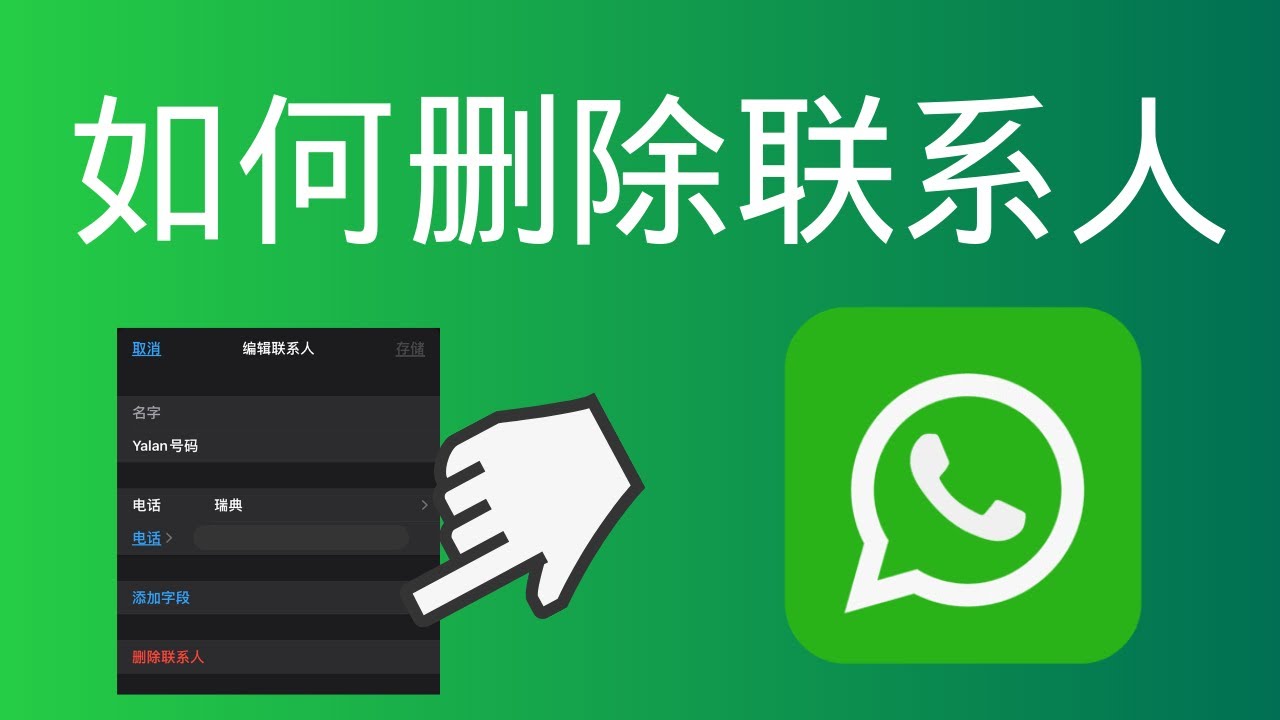
When you block someone on WhatsApp, they do not receive a notification, but they may notice some signs. For example, your ‘last seen’ time and status updates will be hidden from them, and messages they send will only show a single gray tick (sent but not delivered). According to 2024 statistics, about 35% of users […]