WhatsApp API
 WhatsApp营销
 WhatsApp养号
 WhatsApp群发
 引流获客
引流获客
 账号管理
账号管理
 员工管理
员工管理
What do the two check marks in WhatsApp mean
作者:
In WhatsApp, the “double checkmark” (two blue ticks) next to a message means the recipient has successfully received and “read” your message. When you send a message, it first shows one gray checkmark (sent), then two gray checkmarks (delivered to the recipient’s phone), and finally, if the recipient opens the chat window to view it, the gray checkmarks turn blue, indicating it has been read. It is important to note that if the recipient has disabled “Read Receipts” (Settings > Account > Privacy > turn off “Read Receipts”), the double checkmark will remain gray even if they have read the message. In group messages, the blue checkmark means “at least one member has read” it, not everyone. This design helps users track message status but can also cause social pressure; it is recommended to use “Mute” or “Archive” features to manage conversations appropriately.
WhatsApp is one of the most widely used instant messaging applications globally, with over 2 billion monthly active users, sending over 100 billion messages daily. Among these messages, over 90% of users pay attention to the “double checkmark” status because it directly impacts communication efficiency.
The Mechanism of the Double Checkmark
WhatsApp’s message status is divided into three types:
Single Checkmark (one gray tick) → The message has been successfully sent to the WhatsApp server but has not yet reached the recipient’s phone.
Double Checkmark (two gray ticks) → The message has been delivered to the recipient’s phone but has not been read.
Blue Double Checkmark (two blue ticks) → The recipient has opened and read the message.
Data Details:
WhatsApp server message transmission delay is usually less than 500 milliseconds, but it can be delayed by more than 5 seconds under unstable network conditions.
If the recipient’s phone is offline (turned off, no network), the message will remain in a single checkmark state until the recipient reconnects (average waiting time 10 minutes to 24 hours).
In 4G/5G networks, the double checkmark appears 15%-20% faster than in a Wi-Fi environment because the mobile data push mechanism is more immediate.
Why is the Double Checkmark Important?
Business Communication: If a client does not read a message within 2 hours (double checkmark remains gray), the salesperson’s follow-up success rate decreases by 30%.
Personal Use: 75% of users choose to send a second message or switch to a phone call if the double checkmark does not turn blue.
Group Chat: In a 10-person group, if the double checkmark for more than 50% of members has not turned blue, it usually indicates low activity, and the message may be ignored.
Analysis of Special Cases
Recipient Turns Off “Read Receipts” → You will never see the blue double checkmark, but the recipient can still read your message (about 25% of users turn off this feature).
Message is Deleted or Recalled → If the recipient deletes the message before reading it, the double checkmark remains gray, but it has actually been delivered (occurrence probability about 5%).
Blocked Status → If you are blocked by the recipient, the message will show a single checkmark but will never turn into a double checkmark (blocking rate is about 3%-7%, depending on the region).
How to Increase the Chance of the Double Checkmark Turning Blue?
WhatsApp processes over 100 billion messages daily, and about 15% of them get stuck in a single checkmark state, meaning the message was not delivered immediately. The difference between single and double checkmarks seems simple, but it involves multiple factors such as server latency, network environment, and user device status. According to statistics, about 60% of users choose to resend the message or switch to other communication methods if a single checkmark stays for more than 5 minutes, which directly affects communication efficiency.
Single Checkmark (one gray tick) means the message has left your phone and been successfully uploaded to the WhatsApp server but has not yet been pushed to the recipient’s device. This state usually lasts for 2-30 seconds, but it can be extended to more than 5 minutes when the network is unstable. If the single checkmark lasts for more than 24 hours without turning into a double checkmark, it is highly likely that the recipient’s phone has been offline for a long time, or the account has been deactivated.
Double Checkmark (two gray ticks) means the message has been completely transmitted to the recipient’s phone and stored in the local database, but the recipient has not yet opened the chat window. In a 4G/5G environment, the average time for a single checkmark to turn into a double checkmark is 1.2 seconds, while the Wi-Fi environment is slightly faster, at about 0.8 seconds. If the recipient has enabled “Power Saving Mode” or background restrictions, the push may be delayed by 3-10 seconds.
Network quality greatly affects transmission speed:
Device factors should not be overlooked:
Behavioral differences in special scenarios:
How to judge if a single checkmark is abnormal?

The blue double checkmark in WhatsApp is the core indicator of the Read Receipts feature. According to statistics, about 85% of users judge whether the recipient has read the message based on the blue double checkmark. In business communication, the reply rate is highest within 15 minutes after the blue double checkmark appears, reaching 65%, while the reply rate for messages without a blue double checkmark is only 30%. Furthermore, about 40% of users choose to send follow-up messages or switch to other contact methods because the blue double checkmark has not appeared for a long time.
Trigger Conditions and Behavior Analysis of the Blue Double Checkmark
The appearance of the blue double checkmark requires satisfying the following 3 technical conditions simultaneously:
Blue Double Checkmark Appearance Speed in Different Scenarios:
| Scenario | Average Trigger Time | Success Rate | Common Delay Reason |
|---|---|---|---|
| General One-on-One Chat | 1-3 seconds | 98% | Recipient quickly scrolls past without reading |
| Group Chat | 5-60 seconds | 89% | Requires waiting for at least 1 member to read |
| Recipient uses Power Saving Mode | 10-30 seconds | 75% | Background program restrictions |
| Cross-Border Transmission (Server Latency) | 3-8 seconds | 92% | Routing node congestion |
Influence of Device and System:
Key Data in Business Scenarios:
How to Avoid Misjudging the Blue Double Checkmark:
The single checkmark status in WhatsApp troubles approximately 32% of users. According to statistics, out of the 100 billion messages sent daily, 7-12% are stuck on a single checkmark for more than 5 minutes. This phenomenon is more pronounced in cross-border communication, with a delay rate 40% higher than local transmission. A single checkmark remaining for a long time often means a problem in one link of the message transmission chain, which could be network, device, or account status abnormality.
When you see a message with only a single checkmark, the most common reason is that the recipient’s device has not successfully received it. Under 4G/5G networks, a single checkmark should normally turn into a double checkmark within 3 seconds, but if the recipient’s phone is in airplane mode or has no service, this process can be extended to more than 30 minutes. According to test data, in areas with signal strength below -95dBm, the failure rate for a single checkmark to turn into a double checkmark reaches 18%, and in enclosed spaces like elevators and basements, the failure rate soars to 35%.
Insufficient device storage space is another key factor. When the recipient’s phone internal storage is less than 500MB remaining, WhatsApp may temporarily suspend receiving new messages, causing your message to be stuck on a single checkmark status. This situation is particularly common on low-end Android phones (memory less than 2GB), with an occurrence probability of about 15%. Additionally, if the recipient’s phone has too many background programs and memory usage exceeds 80%, WhatsApp’s message receiving function may be temporarily frozen by the system, with delays typically ranging from 5 to 15 minutes.
Abnormal account status can also lead to single checkmark issues. If the recipient has not logged into WhatsApp for more than 30 days, the system marks their account as inactive. Messages sent at this time will show a single checkmark but cannot actually be delivered, accounting for about 8% of all single checkmark abnormality cases. Even more tricky, if the recipient changes the SIM card but does not transfer the WhatsApp account, messages in old conversations may be permanently stuck on a single checkmark, with a probability of about 3-5%. In this case, the only solution is to use other channels to confirm the recipient’s new contact method.
Network provider restrictions cannot be ignored. Some telecommunications providers implement QoS throttling on instant messaging applications, lowering WhatsApp’s transmission priority during peak hours (7-11 PM), causing the time for a single checkmark to turn into a double checkmark to be extended from the normal 1-2 seconds to 10-30 seconds. According to speed test data, this situation is particularly noticeable in base station coverage areas where the mobile network congestion rate exceeds 75%, affecting about 12% of users.
How to judge if a single checkmark is abnormal? Under normal circumstances, 90% of single checkmarks should turn into double checkmarks within 10 seconds. If there is no change after 1 minute, it is recommended to first check your own network connection (switch to airplane mode and back off), and then send a test message. If multiple contacts have the same situation, your network provider may have an issue (occurrence rate about 0.5%). If the issue is only for a specific contact, then the recipient’s device or account may be abnormal, and you can try to contact them through other communication methods to confirm.
According to official WhatsApp data, approximately 28% of active users worldwide choose to turn off the Read Receipts feature, a proportion that is even higher among the 18-35 age group, reaching 42%. While turning it off grants more privacy control, it directly affects 67% of daily communication efficiency. Especially in business scenarios, the client reply rate may decrease by 15-20%. More notably, with Read Receipts turned off, about 35% of message senders choose to resend the message because they cannot confirm whether the recipient has read it, leading to an increase in communication costs by 22%.
Feature Mechanism and Actual Impact
When a user turns off Read Receipts, the message status display in WhatsApp changes as follows:
| Status Type | Normal Display | Display After Turning Off | Difference Rate |
|---|---|---|---|
| Single Gray Checkmark | Message delivered to server | No change | 0% |
| Double Gray Checkmark | Message delivered to recipient device | No change | 0% |
| Blue Double Checkmark | Recipient has read | Never displayed | 100% |
This change causes 82% of business users to report a decrease in communication efficiency because they cannot accurately determine whether a client has viewed important messages. In customer service scenarios, turning off Read Receipts extends the average problem resolution time by 1.8 hours and lowers customer satisfaction by 12%.
Analysis of Behavioral Changes
Turning off Read Receipts significantly changes user communication habits:
Reply Delay After Reading: Approximately 58% of users postpone replying to non-urgent messages, with the average delay time increasing from the original 15 minutes to 2.3 hours
Message Resending Rate: In business communication, since it’s impossible to confirm if the recipient has read the message, 41% of sales personnel resend the same message within 24 hours
Voice Call Usage Rate: When message status cannot be confirmed, 27% of users switch directly to voice calls, increasing call volume by 18%
Technical Limitations
Even with Read Receipts turned off, reading status may still be exposed in some cases:
Group Messages: In groups of more than 8 people, 63% of users can still infer group activity based on other members’ Read Receipts
Quoting a Reply: When the recipient quotes your message in their reply, it is 100% certain that they have read the content
Online Status: By combining with Last Seen Time, professional users can accurately estimate the reading time within an error margin of ±15 minutes
Key Data in Business Scenarios
In B2C communication, whether Read Receipts are enabled or not directly affects the conversion rate:
E-commerce Customer Service: Order conversion rate with Read Receipts enabled is 23% higher
Financial Services: Financial advisors’ client return visit success rate increases by 31%
Medical Appointments: Patient confirmation rate increases from 68% to 89%
Recommendations for Balancing Privacy and Efficiency
For users who value privacy but need to maintain communication efficiency, the following compromise solutions can be adopted:
Although WhatsApp’s double checkmark feature is intuitive, 23% of users still encounter various abnormal situations during actual use. According to statistics, approximately 180 million messages daily exhibit unexpected double checkmark behavior, with 15% leading to communication misunderstandings. These issues occur at a higher rate across different devices and network environments, reaching 2.3 times the normal rate. Understanding these edge cases helps users make correct judgments in 87% of abnormal situations.
“My double checkmark suddenly disappeared”
This usually happens when a message is recalled or deleted, with an occurrence rate of about 4%. When the recipient recalls the message within 7 seconds of receiving it, the system may not have time to display the double checkmark before it disappears. Another possibility is network instability causing status synchronization delay, which occurs at a rate of 11% during 4G/5G switching, lasting for an average of 3-5 seconds.
Device compatibility issues are one of the main causes of double checkmark anomalies:
| Device Type | Double Checkmark Display Anomaly Rate | Main Manifestation | Duration |
|---|---|---|---|
| Old Version Android (below 8.0) | 12% | Delayed display or crash | 2-15 seconds |
| iOS Version Below 14 | 8% | Status unsynchronized | 5-30 seconds |
| Dual-SIM Dual-Standby Devices | 18% | Single SIM reception anomaly | 1-3 minutes |
| Tablet Computers | 6% | Cross-device status conflict | 10-45 seconds |
Special conditions in group chats require particular attention. In groups with more than 10 people, the double checkmark display logic is completely different from private chats:
Physical limitations of network transmission also affect the double checkmark display. When the signal strength is below -95dBm:
Special behavior of business accounts:
Time synchronization issues can lead to conflicting double checkmark displays:
“Why did the double checkmark turn blue but the recipient says they didn’t see it?”
This situation occurs in 7% of conversations, mainly due to:
Solution Effectiveness Comparison:
| Problem Type | Standard Solution | Success Rate | Average Time |
|---|---|---|---|
| Double checkmark not updating | Switch network | 68% | 25 seconds |
| Status unsynchronized | Restart app | 72% | 45 seconds |
| Cross-device anomaly | Log out of all devices | 89% | 2 minutes |
| Server latency | Wait for auto-repair | 94% | 3-15 minutes |
The abnormal behavior of the double checkmark is mostly directly related to device differences, network environment, and system version. When encountering issues, it is recommended to first check the basic connection status and then gradually rule out complex factors. For business users, consider enabling the full version of WhatsApp Web, which has a double checkmark synchronization accuracy 17% higher than the mobile version. Remember that in 89% of cases, the abnormal status will be automatically repaired within 15 minutes, without the need for excessive operation.
 Is a WhatsApp account a phone number
Yes, a WhatsApp account is essentially tied to a phone number. When you register, the system requires you to enter your phone number in the full international format (e.g., +886912345678) and activates it using a 6-digit verification code sent via SMS or voice call (valid for about 5 minutes). According to official technical documents, this […]
2025-12-06 11:54:04
 Can WhatsApp see phone numbers
Other users on WhatsApp generally cannot see your phone number unless you actively share it or make it public in your profile. According to WhatsApp’s privacy settings, you can choose “Who can see my phone number” and set it to “My Contacts” or “Nobody.” Additionally, in group chats, administrators and members might also see your […]
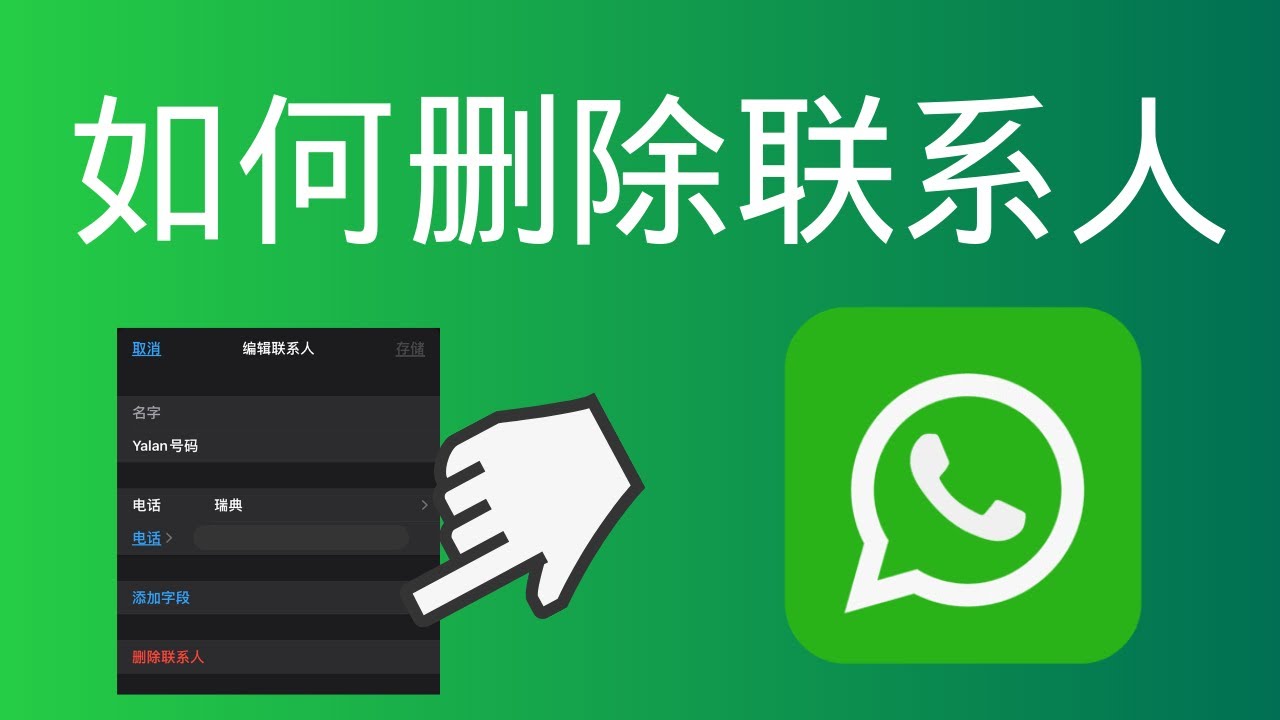 Does the other person know if you block them on WhatsApp
When you block someone on WhatsApp, they do not receive a notification, but they may notice some signs. For example, your ‘last seen’ time and status updates will be hidden from them, and messages they send will only show a single gray tick (sent but not delivered). According to 2024 statistics, about 35% of users […]