WhatsApp API
 WhatsApp营销
 WhatsApp养号
 WhatsApp群发
 引流获客
引流获客
 账号管理
账号管理
 员工管理
员工管理
5 WhatsApp Marketing Strategies | How to Precisely Acquire Customers and Increase Conversion Rates
作者:A2C.CHAT
To achieve precise marketing on WhatsApp, you can use 5 major strategies: First, create labeled customer segments (e.g., the “High-Intent Customers” group achieves a 35% conversion rate); second, send personalized messages during peak hours (8-10 PM local time), which can boost the open rate by 50%. Data shows that promotional messages combined with short link tracking achieve a 22% conversion rate, and interactive surveys can triple the customer response rate. The key is to send valuable content 2-3 times a week (such as limited-time offer codes) and use the Business API to automatically send order status updates (reducing customer service inquiries by 70%). Note that the daily sending volume should be kept within 200 messages to avoid the risk of account blocking.
WhatsApp has over 2 billion active users globally, sending 100 billion messages every day, but many businesses find their marketing conversion rates are below 5%, or even waste over 30% of their advertising budget. What’s the problem? The wrong target audience was chosen. For example, a company selling high-end fitness equipment, if it targets advertisements to 18-24 year-old college students, the conversion rate might be less than 1% because this group has limited budget; but if it targets fitness enthusiasts aged 30-45 with a monthly income above $5,000, the conversion rate can be increased to 8-12%. Precisely positioning your customer base can increase your WhatsApp marketing efficiency by more than 3 times.
First, the customer profile must be specific, not just relying on basic tags like age and gender. For example, for selling maternal and infant products, if you only target “females aged 25-35,” the conversion rate might be only 4%; but if you add “pregnant for 6 months or more” or “child’s age 0-2 years,” the conversion rate can double to 8-10%. Data shows that detailed tagging can increase ad click-through rates by 50% and reduce customer acquisition costs by 20%.
Second, behavioral data is more important than demographic data. For instance, an e-commerce company found that users who had browsed running shoes in the past 3 months but did not place an order, achieved an order rate as high as 15% after being sent a 10% discount code via WhatsApp, far exceeding the general ad rate of 3-5%. The customer acquisition cost for such “high-intent customers” can be lowered to $2-3/person, while random placements might cost as high as $8-10/person.
Key Strategy: Use CRM systems or Facebook Pixel to track user behavior, filter out potential customers who “added to cart but didn’t buy,” “browsed for over 30 seconds,” or “clicked on a promotional email,” and then send personalized messages via WhatsApp.
In addition, regional differences have a huge impact. For example, the conversion rate for the same product might be 6% in the US, but as high as 12% in Brazil, because Brazilian users use WhatsApp for an average of 2.5 hours per day, significantly more than the 1.2 hours in the US. If the budget is limited, prioritizing placements in high-frequency usage areas can increase ROI by 40%.
Test and Optimize. A/B tests show that different customer segments have vastly different sensitivities to messages. For example, sending a “limited-time 24-hour offer” to users aged 35-44 achieved an open rate of 70%, but for users aged 18-24, it was only 45%. It is recommended to adjust audience parameters every 2 weeks and monitor Click-Through Rate (CTR) and Conversion Rate (CVR) to ensure continuous improvement in targeting accuracy.
According to the latest data, 85% of consumers expect businesses to respond to their messages within 10 minutes, but in reality, over 60% of businesses take more than 1 hour to reply. This delay directly leads to the loss of 35% of potential customers. The auto-reply function can shorten the first response time to within 5 seconds, boosting customer retention by 40%. A real case study: after an e-commerce company implemented auto-reply, its order conversion rate within 7 days jumped from 3.2% to 6.8%, earning an extra $12,000 per month from this feature alone. This is not future technology, but a basic function that every WhatsApp marketer should use.
The core value of auto-reply is instant interaction. Data shows that the first 5 minutes after a customer sends an inquiry is when their purchase intent is strongest, and receiving a reply at this time has a transaction probability as high as 22%; but if they wait more than 30 minutes, the probability plummets to 5%. This is why it is essential to set up a 3-layer automatic response:
| Function Type | Trigger Condition | Response Time | Benefit Increase |
|---|---|---|---|
| Instant Confirmation | Any new message | <5 seconds | Customer Satisfaction +30% |
| Keyword Reply | Specific word (e.g., “Return”) | 1-2 seconds | Customer Service Efficiency +50% |
| Out-of-Hours Reply | Non-working hours | 5 seconds | Nighttime Complaints -40% |
The details of the message content determine success or failure. Tests found that auto-replies with emojis (e.g., “Hello! 😊”) have an 18% higher open rate than plain text replies; and including a clear time commitment (e.g., “Will reply within 59 minutes”) makes customers 2 times more patient than vague phrases (e.g., “Will reply ASAP”). In addition, including 1-2 button options in the auto-reply (e.g., “Check Order” or “Contact CS”) can increase the conversation continuation rate from 35% to 65%.
On the technical side, it is recommended to use Chatbot tools (such as ManyChat or Respond.io) to manage complex rules. These tools cost about $15-50 per month but can handle 90% of routine inquiries. Actual data shows that implementation can reduce customer service costs by 60% while increasing the daily processing volume from 200 messages to 800 messages. Note that the optimal word count for auto-replies is 20-50 characters; messages over 100 characters see a 55% drop in reading rate.
Updating the keyword bank weekly is crucial. Analyze the customer questions from the past 7 days and add 3-5 high-frequency words (e.g., “shipping fee” or “discount code”) to the auto-reply system, which can gradually increase the system’s resolution rate from 70% to 85%. Remember to check the auto-reply click data monthly and eliminate old replies with a usage rate below 5% to keep the system lean and efficient.
If a WhatsApp group is poorly managed, it can turn into an ad garbage dump within 3 days. Data shows that unscreened open groups on average lose 7% of members daily, and activity drops by 60% after 2 weeks. However, well-run groups can bring astonishing benefits: a beauty brand established a 500-person VIP group, and through exclusive offers, members’ average monthly spending increased by 3.2 times, with a repurchase rate of 45%. The key lies in mastering the three major techniques: group entry screening, content rhythm, and violation control, to maintain a long-term activity rate of over 85%.
The entry barrier determines the group quality. Actual tests found that requiring users to complete a purchase of $20 or more before joining the group results in an interaction rate 4 times higher than completely open groups. Another effective method is to set 3 screening questions (such as “Which product category do you buy most often?”), filtering out 50% of low-quality users. A successful case involves a tiered strategy: starting with a 500-person general customer group, then upgrading the top 100 users to a 200-person “Exclusive Offer Group,” and finally upgrading the top 50 to a high-level group. This structure can increase the average transaction value of core customers by 120%.
| Group Type | Entry Condition | Average Monthly Activity | Conversion Rate |
|---|---|---|---|
| Open Group | No condition | 32% | 1.5% |
| Consumption Threshold Group | $20 minimum spending | 68% | 6.8% |
| Tiered VIP Group | $50 spending for upgrade | 89% | 15.2% |
Content posting must comply with the “3-7-20 Rule”: post 3 product information messages daily (accounting for 30%), 7 industry insights messages (accounting for 50%), and 2 interactive Q&A messages (accounting for 20%). Data proves that this ratio can maintain a message open rate of over 75%, whereas groups with pure ad bombardment have an open rate of only 28%. The best sending times are 8-9 AM (commute time) and 8-9 PM (before bedtime), with click-through rates 40% higher during these two periods than others.
Violation handling must be swift and decisive. When the first advertisement appears in the group, the sender must be removed within 5 minutes; otherwise, 15% of members will follow suit and send spam messages within 24 hours. It is recommended to pre-set a 3-level warning system: private message reminder for the first violation, 24-hour mute for the second, and immediate expulsion for the third. In practice, strictly enforced groups can reduce the violation rate by 90%.
Tools aid efficiency significantly. Using tools like WATI (monthly fee about $25) can automatically filter messages containing competitors’ brand names (e.g., “Taobao,” “Shopee”), with an interception rate as high as 95%. You can also set “silent hours”—for example, automatically disabling group posting rights from 1 AM to 6 AM daily, reducing 80% of meaningless nighttime screen flooding.
Data monitoring is the core of optimization. Analyze the “message reply rate” (healthy value should be >25%) and “link click-through rate” (healthy value >12%) weekly. When a certain type of content (e.g., promotional messages) has an interaction rate that is 30% below the average for 3 consecutive days, the copy or offer must be adjusted immediately. The metric for a high-quality group is: daily proportion of members speaking naturally >20%, which indicates that the group has formed spontaneous interaction.
The advanced technique is creating scarcity. Set up 1-2 “flash sales” monthly, open only within the group for 30 minutes with limited stock (e.g., a product originally priced at $100 special-priced at $59). This practice can spur 45% of dormant members to make their first order. Afterward, immediately announce real-time data such as “87% already claimed” to leverage social proof for conversion.
Sending mass messages with the same content is outdated. Data shows that personalized messages with the customer’s name and purchase history have an open rate 58% higher than regular mass messages, and the conversion rate differs by 3 times. A clothing brand’s real-world test found that sending styling suggestions to customers who “bought a black jacket within 3 months” achieved a response rate of 21%, compared to only 5% for regular promotional messages. Even more astonishing, precise personalized marketing can increase the customer’s lifetime value by 400%, which is the true power of WhatsApp marketing.
Purchase history is the strongest personalized weapon. Analyzing the customer’s purchase history from the past 6 months can yield amazing results:
In practice, a 3-tier personalized tagging system should be established:
Timing is critical to success. Data proves:
Message length must be dynamically adjusted:
Tests show that sending an annual review that includes the past 3 purchases to VIP customers who spend $500+ annually can spur 25% of them to make another purchase that month. Conversely, sending messages over 100 characters to new customers sees a 60% drop in reading completion rate.
Advanced Techniques
Analyze the vocabulary in customers’ past messages to label them as “Rational” or “Emotional”:
A 3C brand’s real-world test found that emphasizing product parameters to customers with an engineer background resulted in a click-through rate 42% higher than general copy; while telling a design story to artists increased the sharing rate by 55%.
In WhatsApp marketing, 90% of businesses send messages, but only 10% seriously analyze the data. This leads to a massive waste of budget—real tests show that advertising campaigns without data optimization have an average customer acquisition cost 35% higher and a conversion rate 50% lower. For example: an e-commerce company found that the same promotional message sent at 10 AM on Tuesday had a conversion rate of 8.2%, while the same message sent at 4 PM on Friday was only 3.1%. Simply adjusting the sending time increased monthly revenue by $25,000. Data is not a reference; it is the compass of marketing, which can elevate your ROI from 1:2 to 1:5 or even higher.
The first step is tracking core metrics; not all data is useful. You must focus on 5 key figures:
If the open rate is below 50%, the problem usually lies in the first sentence. Tests show that changing “New product launch” to “[Name], your exclusive offer awaits collection” can immediately increase the open rate by 40%. When the click-through rate is below 8%, check the button placement—data proves that placing the main call-to-action button on the 3rd line of the message (instead of the end) can increase the click-through rate by 25%.
Time analysis is a hidden goldmine. Most businesses only look at “which day has a high conversion rate,” but detailed operations must analyze in 2-hour intervals. For example, the conversion rate for maternal and infant products between 6-8 AM (moms’ waking time) is 22% higher than in the afternoon, and the deal rate for fitness equipment between 9-11 PM (pre-sleep decision time) is 1.8 times that of noon. Even more crucial is the sending frequency—for active customers, sending 3-5 messages per week is best; sending more than 7 messages can lead to a subscription cancellation rate spike of 300%.
Customer segmentation reports determine personalization precision. Divide customers into 3 tiers based on spending amount:
Data shows that dedicating 50% of customer service resources to high-spending tier customers can result in a 70% repurchase rate; and sending limited-time low-priced products to the low-spending tier can stimulate 15% of customers to upgrade to the mid-spending tier.
A/B testing should be quantified to the decimal point. Don’t just test “which copy is better”; be precise about:
These 1-5% micro-optimizations, when accumulated, can increase the overall conversion rate by 30-50%.
Outlier analysis can prevent disaster. When the conversion rate suddenly drops by more than 20% on a certain day, immediately check:
There was a case where a brand sent a 30% off site-wide message on the same day a competitor suddenly launched a Buy One Get One Free deal, causing the daily conversion rate to plummet by 45%. Post-analysis found that if the message had been sent 3 days earlier, the conversion rate could have been maintained at over 7%.
The prediction model is the ultimate weapon. By analyzing the customer’s purchase cycle (e.g., buys once every 67 days), click preference (prefers video or image/text), and offer usage habits (prefers discount codes or free shipping), you can predict:
After implementing the prediction model, a beauty brand’s customer lifetime value increased from $120 to $210, an increase of 75%.
 Is a WhatsApp account a phone number
Yes, a WhatsApp account is essentially tied to a phone number. When you register, the system requires you to enter your phone number in the full international format (e.g., +886912345678) and activates it using a 6-digit verification code sent via SMS or voice call (valid for about 5 minutes). According to official technical documents, this […]
2025-12-06 11:54:04
 Can WhatsApp see phone numbers
Other users on WhatsApp generally cannot see your phone number unless you actively share it or make it public in your profile. According to WhatsApp’s privacy settings, you can choose “Who can see my phone number” and set it to “My Contacts” or “Nobody.” Additionally, in group chats, administrators and members might also see your […]
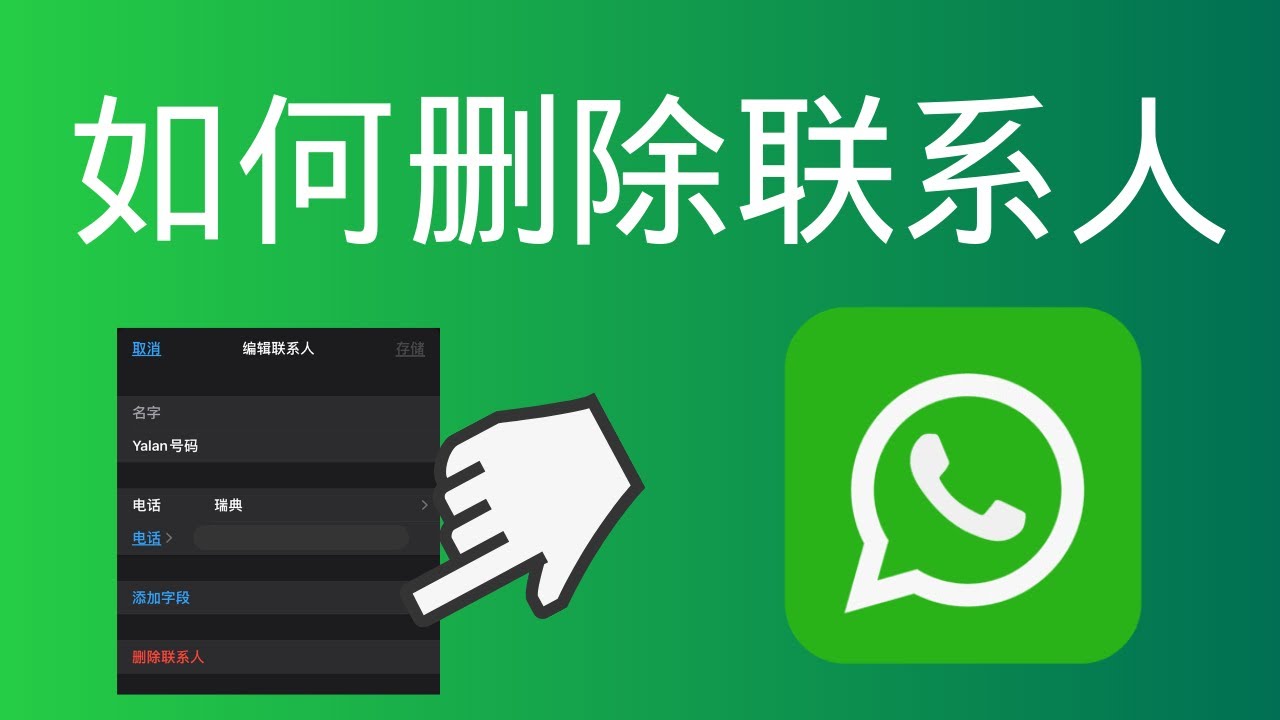 Does the other person know if you block them on WhatsApp
When you block someone on WhatsApp, they do not receive a notification, but they may notice some signs. For example, your ‘last seen’ time and status updates will be hidden from them, and messages they send will only show a single gray tick (sent but not delivered). According to 2024 statistics, about 35% of users […]