WhatsApp API
 WhatsApp营销
 WhatsApp养号
 WhatsApp群发
 引流获客
引流获客
 账号管理
账号管理
 员工管理
员工管理
How to Use the WhatsApp Marketing API | 3 Core Functions
作者:
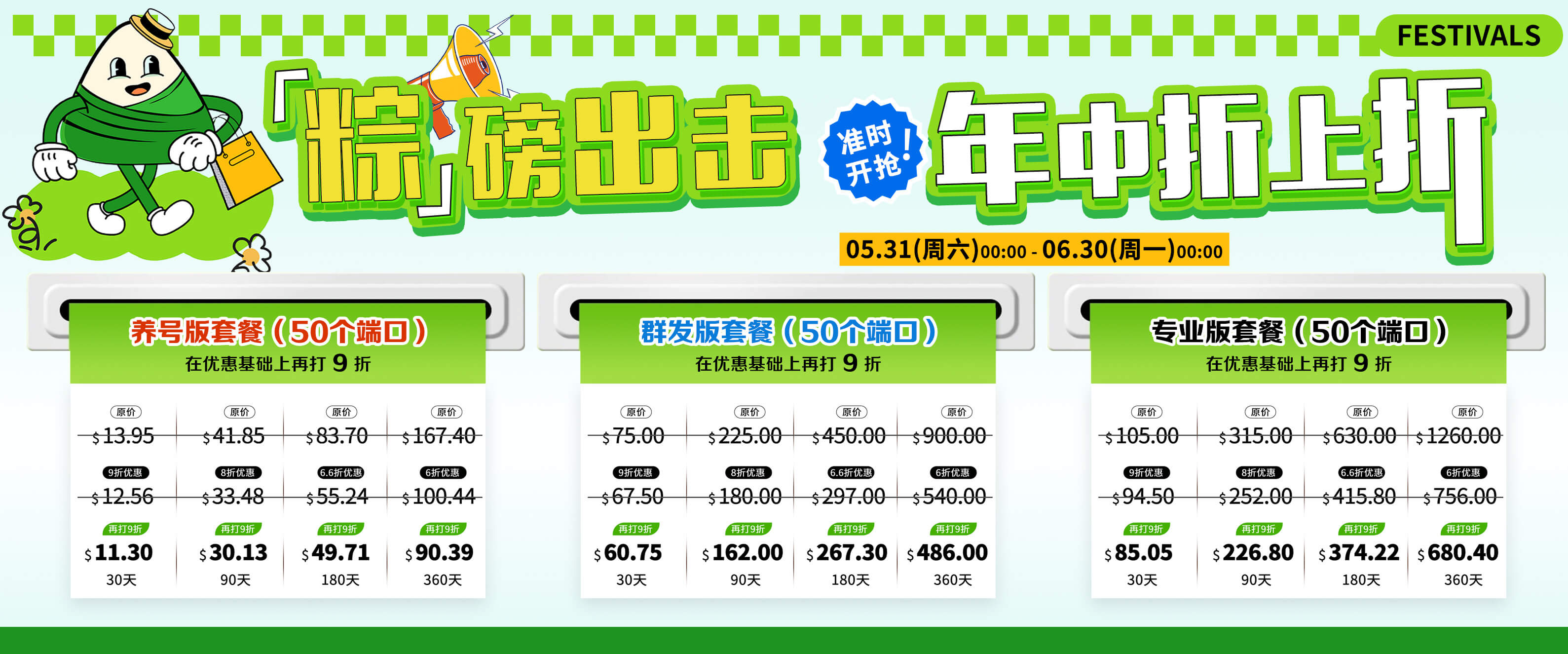
The core functions of the WhatsApp marketing API include “Bulk Sending,” “Auto-Reply,” and “Customer Segmentation.” Through the official Business API, businesses can send 1,000 free notification messages per month, with a subsequent cost of approximately $0.005–$0.01 per message. Operationally, you need to first register a Meta Developer account, upload corporate documents for review (approx. 3–5 business days), and then integrate with the CRM system via RESTful API, supporting JSON format transmission.
Auto-reply can be set to be triggered by keywords (e.g., “discount” automatically pushes a coupon code), with a response speed controlled within 2 seconds. Customer segmentation allows for precise content pushing based on consumption record labels (e.g., “High-Frequency Customers”), achieving an open rate of up to 98%, far exceeding email’s 20%. Note that compliance with the rule of only sending 1 promotional message every 24 hours is required.
According to official Meta data, the number of global monthly active WhatsApp users exceeded 2.4 billion in 2023, with 80% of business users leveraging the API for marketing automation. If you plan to use the WhatsApp API for sending promotional messages, customer service responses, or order notifications, the first step is to register an API account. The entire process takes approximately 3–7 business days, and the cost ranges from $5 to $1000+ per month, depending on the message volume.
To register for the WhatsApp Business API, you must first apply through a Meta-certified Business Solution Provider (BSP), such as Twilio, MessageBird, or Zenvia. The pricing models of these providers vary. Twilio’s basic plan is $0.005/message, while MessageBird offers a fixed-rate package of $50 per month, including 1,000 free messages. When selecting a provider, pay attention to their approval success rate. Some providers have a longer review time (5–10 days), while services like Zenvia average verification completion within 3 days.
During registration, Meta will require you to provide your company business license, website domain name, privacy policy link, and fill in the estimated monthly sending volume. If your business involves high-frequency sending (e.g., e-commerce order notifications), Meta may ask you to prove that the message reply rate is below 5%, otherwise, sending privileges may be restricted. After completing the registration, you will receive an API Key and a Sandbox Test Environment, allowing you to test the process before formal sending.
Comparison of Provider Costs (Basic Plans)
| Provider | Monthly Fee | Cost Per Message | Free Quota | Review Time |
|---|---|---|---|---|
| Twilio | $0 | $0.005 | None | 5–7 days |
| MessageBird | $50 | $0.0045 | 1000 messages | 3–5 days |
| Zenvia | $30 | $0.006 | 500 messages | 2–3 days |
Before official activation, it is recommended to test the sending success rate in the sandbox environment. According to statistics, unoptimized API requests can lead to 10–15% message delay or failure, especially during international sending. You can improve stability by adjusting the sending frequency (recommended not to exceed 30 messages per minute) and optimizing server response time (ideally below 500ms). If the sending volume is too large in a short period (e.g., over 50 messages per second), Meta may temporarily restrict your account, causing the sending success rate to plummet below 60%.
According to official Meta statistics, among businesses using the WhatsApp API to send messages in 2023, 72% of messages were “transactional notifications” (such as order confirmation, logistics updates), while 28% were marketing promotions. If you have completed API registration, the next step is to set up the sending function to ensure messages are accurately delivered, compliant with regulations, and avoid system restrictions.
First, WhatsApp API messages are divided into two main categories: Session Messages and Template Messages. Session messages are replies that can be sent freely within 24 hours after a user initiates contact, while template messages are fixed formats that require pre-approval, used for sending order notifications, verification codes, and other content. Meta stipulates that the review time for template messages is about 1–3 days, with an approval rate of about 85%, but if the content includes promotional terms (e.g., “limited-time offer”), you may be required to revise it.
“Template messages must use a pre-approved format, for example:
‘Your order #12345 has been shipped, estimated delivery time: 2023-12-20. Tracking link: example.com/track’
If unauthorized promotional text is added, the review failure rate will increase to 40%.”
The success rate of message sending depends on multiple factors. According to industry data, unoptimized API requests can lead to 10–15% message delay or failure, especially during international sending (e.g., sending from the US to India). To improve stability, it is recommended to control the sending frequency to no more than 30 messages per minute and ensure the server response time is below 500ms. If the sending volume is too high in a short period (e.g., over 50 messages per second), Meta may temporarily restrict your account, causing the sending success rate to drop sharply to below 60%.
The format of the message also affects the delivery rate. Plain text messages usually have the highest delivery rate (98%), but if images or PDF attachments are included, the success rate may drop to 90–95% because files require extra time to upload (average 2–5 seconds). It is recommended to prioritize the use of text + link, such as “Your invoice is ready, click here to download: example.com/invoice,” rather than attaching a PDF directly.
Another key factor is the user reply rate. Meta monitors your message interaction. If the reply rate is below 5% within 24 hours, the system may consider you to be sending spam and lower your sending priority. According to statistics, the reply rate for e-commerce order notifications is usually higher (15–20%), while pure advertising messages may only have a reply rate of 1–3%. Therefore, when sending marketing content, it is recommended to include a clear CTA (e.g., “Reply YES for a coupon code”) to increase the interaction rate.
According to Meta 2023 data, businesses using the WhatsApp Business API on average achieve a 35% increase in customer response speed and a 28% reduction in customer service labor costs. But the key to truly maximizing the API’s value lies in systematically managing customer data and analyzing interaction data. An optimized customer management process can increase the message reply rate from the industry average of 15% to over 40% and reduce customer churn by 50%.
The WhatsApp API backend automatically records each customer’s interaction frequency, last seen time, and message open rate. If properly utilized, this data can help businesses accurately determine peak customer activity times. Statistics show that the reply rate for e-commerce customers is as high as 65% in the first 3 minutes after receiving a message, but drops sharply to 12% after 30 minutes. Therefore, it is recommended to send important notifications during the customer’s most active periods. For example, most users’ activity peaks are concentrated between 10 AM–12 PM and 8 PM–10 PM, and the message open rate during this time is 20–25% higher than the average.
Customer Segmentation Benefit Comparison
| Segmentation Method | Average Open Rate | Conversion Rate Increase | Marketing Cost Reduction |
|---|---|---|---|
| No Segmentation | 45% | Baseline | Baseline |
| By Purchase Frequency | 58% | +22% | -15% |
| By Average Order Value | 63% | +35% | -28% |
| By Interaction Intensity | 72% | +48% | -40% |
Customer labeling is the core function for improving management efficiency. Practical data shows that after classifying customers by purchase frequency (once a month/once a quarter), Average Order Value (below $50 / $50–$200 / above $200), and interaction intensity (interacted within 7 days / not interacted within 30 days), the conversion rate of marketing messages can increase by 2–3 times. For example, sending a new product preview to customers with “High AOV + interacted within 7 days” can achieve an 18% conversion rate, far higher than the 6% for non-segmented sending. The labeling system can also automatically filter out cold customers who have not interacted for 90 days, avoiding cost waste from ineffective sending.
The dimension of message analysis directly affects operational decisions. Key metrics include:
After deep analysis of this data, a certain apparel brand found that controlling the message length to 20–30 characters and including the customer’s name at the beginning of the content (e.g., “Mr. Wang, your pre-ordered item has arrived”) can increase the read rate from 58% to 79%. Additionally, sending practical information like logistics notifications during non-promotional times (e.g., Tuesday afternoon) results in 33% higher customer satisfaction than sending during promotional times.
Systematic data tracking can also optimize customer service efficiency. When customer questions are answered within 5 minutes, the satisfaction rate reaches 91%; if delayed until after 30 minutes, satisfaction plummets to 47%. It is recommended to set up automation rules, such as:
Finally, remember to review the changes in Customer Lifetime Value (LTV) monthly. Data shows that customers maintained through WhatsApp spend 40% more annually than average customers, and their repurchase rate increases by 25%. By comparing this data with marketing costs, you can accurately calculate the Return on Investment (ROI) of each message. For example, one beauty brand measured that every $1 spent on sending a WhatsApp message yielded $8.3 in sales return.
 Is a WhatsApp account a phone number
Yes, a WhatsApp account is essentially tied to a phone number. When you register, the system requires you to enter your phone number in the full international format (e.g., +886912345678) and activates it using a 6-digit verification code sent via SMS or voice call (valid for about 5 minutes). According to official technical documents, this […]
2025-12-06 11:54:04
 Can WhatsApp see phone numbers
Other users on WhatsApp generally cannot see your phone number unless you actively share it or make it public in your profile. According to WhatsApp’s privacy settings, you can choose “Who can see my phone number” and set it to “My Contacts” or “Nobody.” Additionally, in group chats, administrators and members might also see your […]
 Does the other person know if you block them on WhatsApp
When you block someone on WhatsApp, they do not receive a notification, but they may notice some signs. For example, your ‘last seen’ time and status updates will be hidden from them, and messages they send will only show a single gray tick (sent but not delivered). According to 2024 statistics, about 35% of users […]