WhatsApp API
 WhatsApp营销
 WhatsApp养号
 WhatsApp群发
 引流获客
引流获客
 账号管理
账号管理
 员工管理
员工管理
WhatsApp SCRM System | Self-built vs SaaS
作者:A2C.CHAT
The initial cost for a self-built system is about 150,000 to 300,000 RMB (including server and API integration), suitable for enterprises with a daily message volume of 5,000+, requiring a dedicated IT team for maintenance. SaaS solutions like ChatDaddy or WATI cost 800 to 3,000 RMB per month, offering ready-made tag management and automated routing (with an open rate tracking accuracy of 98%). Practical tests show that SaaS deployment is 10 times faster than self-building (3 days vs. 30 days), but a self-built system allows for 100% customized reports. It is recommended that teams with less than 200 people prioritize SaaS, and those with an annual budget below 500,000 RMB choose a pay-as-you-go plan.
According to a 2024 enterprise communication tool survey, approximately 65% of small and medium-sized enterprises (SMEs) choose to lease a SaaS version of SCRM, while 35% opt for a self-built system. The average initial investment for a self-built WhatsApp SCRM system ranges from 80,000 to 150,000 RMB, including server, licensing fees, and development costs, whereas SaaS solutions cost only 300 to 800 RMB per month. However, a self-built system offers 40% higher data control and customization level than SaaS, making it suitable for enterprises with special requirements.
The biggest advantage of a self-built system is complete data control. Enterprises can choose to store data on local servers or private clouds, avoiding SaaS providers’ access to sensitive information. For instance, 80% of the financial and healthcare industries choose self-built solutions to comply with regulations like GDPR or HIPAA. Additionally, a self-built system provides greater flexibility for API integration, allowing direct connection to existing enterprise ERP or CRM systems, reducing data synchronization latency by 30%-50%.
However, the maintenance cost of a self-built WhatsApp SCRM cannot be overlooked. Enterprises need to employ at least 1 dedicated IT staff member, with an annual salary of approximately 120,000 to 200,000 RMB, and also bear server rental or cloud hosting fees, which are about 500 to 2,000 RMB per month for AWS or Alibaba Cloud. In contrast, SaaS solutions already include technical support and system updates, with an average cost per user of only $0.5-$2 USD per month.
In terms of performance, the message sending speed of a self-built system is 15%-25% faster than SaaS, as enterprises can optimize the local network architecture. For example, after a certain e-commerce company built its own WhatsApp SCRM, customer service response time dropped from 120 seconds to 80 seconds, increasing the conversion rate by 18%. However, if the enterprise traffic suddenly surges (e.g., during a promotion), the self-built system may face bandwidth shortage issues, whereas SaaS providers can usually scale automatically.
|
Comparison Item |
Self-Built System |
SaaS Solution |
|---|---|---|
|
Initial Cost |
80,000-150,000 RMB |
300-800 RMB/month |
|
Data Control |
100% |
Depends on provider policy |
|
Maintenance Staff |
Requires 1 IT specialist |
No extra staff needed |
|
Customization Flexibility |
High (can modify source code) |
Medium (limited to provider features) |
|
Suitable Enterprise Size |
Medium to Large (monthly messages > 100k) |
Small to Medium (monthly messages < 50k) |
The Return on Investment (ROI) of a self-built system typically takes 12-18 months to materialize, making it suitable for enterprises with long-term, stable usage. If an enterprise’s WhatsApp message volume is less than 50,000 messages per month, choosing a SaaS solution is more cost-effective, as the fixed costs of a self-built system are difficult to amortize. However, if the enterprise has special requirements, such as integrating internal AI customer service or automated marketing workflows, the flexibility of a self-built system can bring greater benefits.
According to the 2024 enterprise communication tool market report, enterprises adopting SaaS WhatsApp SCRM have an average go-live time of only 3-7 days, which is 85% faster than a self-built system. The monthly fees for these ready-made services range from 300 to 1,500 RMB, depending on the number of users and feature requirements, but the initial investment is only 5%-10% of the self-built option. For SMEs sending 10,000 to 50,000 messages per month, this model can keep customer management costs within 1.2%-2.5% of revenue.
The most significant advantage of ready-made services is maintenance-free operation. Providers are responsible for all system updates, security patches, and server scaling, saving enterprises 80,000 to 150,000 RMB in annual IT labor costs. For example, a retail brand using a SaaS solution reduced its IT department’s monthly time spent on communication system maintenance from 22 hours to 3 hours, equivalent to releasing 228 man-hours of productivity annually. These services usually include a 99.5% uptime guarantee, with message transmission latency controlled within 800 milliseconds, a performance difference of less than 15% compared to self-built systems.
In terms of feature expandability, mainstream SaaS providers launch 2-3 new features every quarter. For instance, the AI auto-reply function added in 2023 increased the response speed of a certain e-commerce customer service team by 40% and reduced human resource needs by 25%. These updates are completely free for users. In contrast, if a self-built system were to implement equivalent features, each update would require an investment of 5,000-20,000 RMB in development costs. Ready-made services also have built-in integration with 30+ third-party tools, including Shopify, Zapier, and Salesforce, with connection speeds 50%-70% faster than self-built APIs.
|
Cost Item |
SaaS Solution |
Self-Built System |
|---|---|---|
|
Total First-Year Investment |
3,600-18,000 RMB |
80,000-150,000 RMB |
|
Average Maintenance Man-Hours/Month |
3 hours |
22 hours |
|
Feature Update Cost |
0 |
5,000-20,000 RMB/time |
|
System Downtime Risk |
<0.5% |
2-5% (without dedicated IT) |
|
Bandwidth Expansion Cost |
Automatic adjustment (0 surcharge) |
Monthly fee +15% for every 1Mbps increase |
In terms of data security, top SaaS providers use AES-256 encryption and are ISO 27001 certified, providing bank-grade security. Although enterprises cannot fully control the data location, 78% of providers offer data region selection, for example, allowing Asian customer data to be stored on Singapore servers. Backup frequency reaches every 15 minutes, which is more reliable than the daily backup of most self-built systems. When facing a DDoS attack, the automatic defense system of a SaaS platform can be activated within 90 seconds, while a self-built solution requires manual configuration, with an average response time of 15-30 minutes.
For growing enterprises, the flexible billing of SaaS is particularly useful. Users can increase or decrease the number of seats at any time, with the monthly fee increasing by only 50-100 RMB for each additional customer service account. During peak seasons, the message volume can be instantly expanded by 5-10 times without the need for pre-purchasing hardware. A certain travel platform temporarily expanded its concurrent online customer service staff from 20 people to 80 people during holidays. The additional cost for two weeks was only 1,200 RMB. A self-built system would require an upfront investment of 30,000-50,000 RMB to upgrade the server.
From an ROI perspective, enterprises using ready-made services can achieve break-even in an average of 3-6 months, while a self-built system takes 12-18 months. This is crucial for SMEs with limited cash flow, allowing them to focus valuable funds on core business rather than infrastructure. According to statistics, enterprises using SaaS SCRM have seen their customer service team productivity increase by an average of 35% and customer satisfaction improve by 20%. These benefits start to appear within 60 days after implementation.
According to the 2023 enterprise communication software procurement report, the total cost in the first year for enterprises implementing WhatsApp SCRM varies significantly: the self-built option requires an average of 120,000-250,000 RMB, while the SaaS version only needs 5,000-20,000 RMB, a difference of nearly 15 times. This gap mainly comes from three aspects: hardware investment, human resource allocation, and hidden costs. For SMEs with a monthly message volume below 80,000 messages, the SaaS solution can save over 85% of the budget in the first year alone.
“A cross-border e-commerce company, after evaluating both options, found that the procurement of basic infrastructure alone accounted for 62% of the self-built system’s first-year budget, including server (35,000), licensing fees (18,000), and network equipment (21,000). The monthly fee for equivalent features in SaaS was only 650 RMB.”
The fixed cost threshold for a self-built system is very high. Enterprises need to pay a one-time official licensing fee for the WhatsApp Business API of about 15,000-30,000 RMB (graded by message volume), plus at least two redundant servers, with commercial models like the Dell PowerEdge R750 costing 42,000-48,000 per unit. If choosing cloud hosting, the AWS EC2 m6i.xlarge instance starts at a monthly fee of 2,300 RMB, plus 1.2 times the bandwidth cost. These hardware expenditures account for 55-70% of the total budget, and the utilization rate is often less than 40% in the initial stage, leading to resource waste.
In contrast, the SaaS solution converts these costs into variable expenses. Entry-level plans from mainstream providers like ChatNode or Wati cost 300-800 RMB per month, including a free message quota of 5,000-10,000 messages. Anything over is billed at 0.01-0.03 RMB/message. This usage-based pricing model reduces the enterprise’s cash flow pressure by 75%. More importantly, SaaS includes security measures such as SSL encryption and firewalls, eliminating the need for enterprises to purchase additional cybersecurity software licenses costing 20,000-30,000 per year.
Labor costs are often underestimated. A self-built system requires an enterprise to allocate at least 0.5 full-time IT staff for maintenance. Taking the Taiwan market as an example, this translates to 25,000-40,000 in monthly personnel costs. This labor is responsible for API integration (average time spent 18-25 man-hours), system monitoring (1.5 hours daily), and troubleshooting (3-5 unexpected interruptions per month). The SaaS solution shifts this workload to the provider. Enterprise customer service staff can be trained in 3-5 hours to operate the backend, reducing labor investment by 90%.
“A medium-sized logistics company’s actual calculation showed that the hidden costs of a self-built system in the first year were as high as 78,000 RMB, including system migration (21,000), employee training (15,000), and business losses during the trial operation phase (42,000). The same items for SaaS only cost 8,500 RMB.”
From a time cost perspective, a self-built system takes an average of 45-60 days from procurement to official launch, including hardware procurement cycle (15-20 days), environment setup (10 days), and stress testing (7 days). This downtime may cause the enterprise to miss 18-22% of potential customer contact opportunities. In contrast, the SaaS solution only takes 3-7 days to complete account activation and basic setup, allowing it to immediately handle 95% of existing customer traffic and quickly generate revenue.
The difference in licensing models is also significant. A self-built system often uses a perpetual license but requires an annual maintenance fee of 15-20%. For example, a certain SCRM software might cost 80,000 for outright purchase, but the update fee starting from the second year would be 12,000-16,000/year. SaaS is a subscription model, with contracts typically monthly or yearly, allowing enterprises to adjust the plan size based on business volume at any time. In terms of product lifecycle, the technical obsolescence cycle for self-built systems is about 2.5-3 years, while SaaS providers continuously update the underlying infrastructure, meaning users do not need to worry about hardware aging. 
According to the 2024 enterprise communication system operations and maintenance report, the five-year total maintenance cost for a self-built WhatsApp SCRM averages 350,000-500,000 RMB, which is 3-4 times that of the SaaS solution. This gap primarily stems from three dimensions: labor, upgrade, and risk costs, especially as the hidden expenditures of the self-built option begin to increase significantly after 18 months of system operation. Taking an enterprise processing 100,000 messages per month as an example, the five-year maintenance cost for SaaS is about 120,000-150,000 RMB, while the self-built system may exceed 450,000 RMB.
• Labor Cost is the Biggest Expense
A self-built system must have dedicated IT personnel. In the Taiwan market, this means a monthly personnel expense of 40,000-60,000 RMB, totaling 2,400,000-3,600,000 RMB over five years. This labor is mainly spent on: server monitoring (1.2 hours daily), security updates (8-12 hours monthly), and troubleshooting (an average of 2.5 unexpected interruptions per month, each taking 3-4 hours to resolve). In contrast, SaaS transfers this workload to the provider, requiring the enterprise to invest only 5-8 hours per month in operational management time, reducing labor costs by 92%.
The expense of system upgrades is often underestimated. A self-built solution requires a medium-sized update every 12-18 months, each costing 30,000-50,000 for purchasing new licenses or hardware expansion. For example, the WhatsApp API version upgrade in 2023 forced 68% of self-built users to replace compatible modules, with an average expenditure of 28,000. SaaS users automatically receive these updates, saving 150,000-200,000 in upgrade costs over five years. More importantly, the technical debt of a self-built system accumulates over time. Maintenance man-hours usually increase by 40% after 3 years of operation due to increasing compatibility issues between old code and new environments.
The hidden cost difference from security risks is even greater. A self-built system experiences an average of 4.2 security incidents annually, with each resolution costing about 8,000-15,000 RMB, including vulnerability patching, data recovery, and compliance review. In 2023, a certain retail brand suffered a 23-hour service outage and 120,000 in customer compensation due to an SCRM system breach. SaaS providers leverage large-scale protection to suppress this risk to less than 0.3 times per year, with losses covered by the platform. Enterprises can avoid 50,000-80,000 in potential risk expenditure over five years.
Energy and space costs cannot be ignored. A self-built server consumes about 300-500 kWh of electricity per month, with electricity expenses of 1,500-2,500 RMB, totaling 90,000-150,000 over five years. If using a data center for hosting, the monthly rent per device is an additional 800-1,200. These fixed expenses cannot be reduced during off-peak business seasons. When the message volume drops by 30%, the energy efficiency of a self-built system deteriorates by 45%. The SaaS solution is completely flexible; the cost decreases proportionally immediately when usage reduces.
From a lifecycle perspective, the depreciation loss of self-built hardware is significant. Servers typically retain only 25-30% residual value after 3 years and are nearly obsolete after five years, requiring another 40,000-50,000 to purchase new machines. This cyclical replacement cost accounts for 18-22% of the total expenditure. SaaS users do not have this issue, always using the latest infrastructure. For example, in 2024, mainstream providers have all upgraded to AMD EPYC 9754 processors, with a single-core performance 170% higher than the enterprise-purchased Xeon Silver 4310, but users do not pay extra.
The gap in Total Cost of Ownership (TCO) widens over time. Calculated over a five-year period, for an enterprise handling 80,000 messages per month, the total cost for the self-built option is about 550,000-700,000, while SaaS is only 160,000-200,000. Even considering that the self-built system might be fully amortized after the 4th year, the technology would already be 2-3 versions behind the new generation of SaaS services, and catching up would require an additional investment of 100,000-150,000 in upgrade fees. This is why 73% of medium-sized enterprises eventually switch to a SaaS solution after using a self-built system for 3.5 years.
According to the 2024 SME digital tool survey, among small enterprises with 10-50 employees, 82% choose the SaaS version of WhatsApp SCRM, with only 18% adopting a self-built system. There are three key factors behind this disparity: projects with an initial investment exceeding 60,000 RMB will squeeze the cash flow of 47% of small enterprises, while the monthly expenditure of 300-800 RMB for the SaaS solution accounts for only 0.3-0.8% of average revenue. More importantly, the monthly WhatsApp message volume for small enterprises typically falls within the 5,000-30,000 messages range, a scale at which the hardware utilization of a self-built system is less than 40%.
The three major cost traps small enterprises should be most concerned about:
Idle Labor Cost: A self-built system requires at least 0.5 full-time IT staff, but the system maintenance workload for a small enterprise is only 15-20 hours per month, meaning they pay a 40,000 monthly salary but only utilize 35% of the working hours.
Technical Obsolescence Loss: A self-built system faces technical obsolescence every 2.5 years on average, with the residual value dropping to only 30%, equivalent to an annual amortization loss of 12,000-18,000 in intangible assets.
Opportunity Cost: Investing 500,000-800,000 in a self-built SCRM system could yield a 3-5 times higher ROI if used for business expansion.
From a real-world case, a cross-border e-commerce company with 25 employees originally planned a budget of 120,000 for a self-built system but later switched to a SaaS solution with a monthly expenditure of 650 RMB. The saved funds were used for Google Ads placement, and sales grew by 210% after 6 months. If they had chosen the self-built option during the same period, the system would not have even completed stress testing. 72% of message transmission for these SMEs is concentrated between Monday to Friday, 9:00-18:00, resulting in 65% of the self-built server’s computing resources being idle during off-peak hours, equivalent to wasting 24,000 in annual electricity and depreciation.
In terms of system performance requirements, the peak concurrent requests for small enterprises rarely exceed 50 times/second. This volume can be perfectly handled by shared SaaS, with latency controlled within 800 milliseconds. Conversely, a self-built system, to cope with potential growth, usually pre-purchases equipment capable of handling 200 times/second, resulting in 85% of the processing power never being utilized. A certain apparel brand’s actual monitoring found that its customer service peak request rate was only 28 times/second, yet it purchased a server capable of handling 150 times/second, resulting in an additional 90,000 spent on surplus performance over five years.
Compliance is also a critical consideration. 91% of enterprises with fewer than 50 employees do not have dedicated legal staff, making it difficult to cope with data regulations like GDPR. The built-in compliance features of SaaS providers can automatically filter 98% of sensitive vocabulary and complete encrypted backup every 15 minutes. Developing these independently would require an investment of 30,000-50,000/year in third-party service fees. In 2023, a certain food trading company was fined 2% of its revenue, equivalent to twenty years of SaaS fees, because its self-built system failed to implement voice message encryption.
From a business flexibility perspective, small enterprises often experience seasonal fluctuations, with order volumes potentially surging by 300% before holidays. SaaS solutions can scale at any time, temporarily increasing the message quota from 20,000 messages per month to 80,000 messages during the Singles’ Day event, with an additional cost of only 1,800 RMB. If self-built, the system would need to maintain 4 times the capacity permanently, leading to an additional annual expenditure of 60,000-80,000 on idle resources. More crucially, 68% of small enterprises adjust their business model within 3 years. SaaS allows for easy switching of functional modules, while a self-built system requires rewriting 30-40% of the original code for each major revision, taking an average of 45 days and costing 50,000+.
According to the 2024 enterprise communication security report, enterprises using WhatsApp SCRM face an average of 2.3 security threat attempts per month, with 68% targeting customer data theft. Professional SaaS providers can suppress the actual successful intrusion rate to 0.03%, while the average defense success rate for a self-built system is only 85%. The difference mainly comes from three aspects: encryption technology, backup mechanism, and access control. In the financial industry, for example, adopting a compliant SaaS solution reduced data breach incidents from 5.2 times per year to 0.4 times, a risk reduction of 92%.
“A medical device company’s practical test found that deploying end-to-end encryption in a self-built system required 17 days and 23,000 in technical costs, whereas the SaaS solution comes with built-in AES-256 and TLS 1.3 dual encryption, with an annual increase of only 800 RMB in fees.”
|
Security Metric |
Self-Built System |
Professional SaaS Solution |
|---|---|---|
|
Encryption Strength |
Requires self-deployment (usually AES-128) |
Default AES-256 + TLS 1.3 |
|
Backup Frequency |
Once daily (manual risk +15%) |
Automatic off-site backup every 15 minutes |
|
Access Logs |
Retained for 30 days (75% retrieval success rate) |
Retained for 365 days (99.9% retrieval success rate) |
|
Vulnerability Patching |
Average response time 48 hours |
Automatic patching (average 2.1 hours) |
|
Compliance Certification |
Requires an additional cost of 30,000-50,000 to obtain |
Includes ISO 27001/SOC2 |
In terms of transport layer security, professional SaaS providers use dual-channel encryption. Messages use WhatsApp’s native Signal protocol on the mobile end, and TLS 1.3 is layered over the backend data transmission, suppressing the interception success rate to 3 in a billion. If a self-built system is not professionally configured, the transport layer may use only single encryption, increasing the risk by 8 times. An e-commerce platform once had 18,000 customer records stolen during transmission because its self-built system only used TLS 1.2, resulting in a loss of 1.2% of revenue.
The backup mechanism directly relates to disaster recovery capability. Top-tier SaaS solutions implement a 3-2-1 backup strategy: 3 copies, 2 media types, 1 off-site copy, with incremental backups every 15 minutes. This keeps the Recovery Point Objective (RPO) within 5 minutes, while self-built systems typically only back up daily, with an RPO as long as 23 hours. In 2023, a manufacturing company suffered a ransomware attack. Due to the multi-point-in-time backup of its SaaS, it only lost 8 minutes of data. A peer with a self-built system, in contrast, had to revert 36 hours, equivalent to 150,000 orders of data.
The granularity of access control is even more different. The SaaS backend can set 7 levels of permission, from read-only to super administrator, with every operation recording 40+ items of metadata (time, IP, device fingerprint, etc.). A self-built system, if it doesn’t purchase a professional IAM module, usually has only 3 levels of permission, and the logs only record basic information. In the event of an internal threat, the SaaS solution can 98% precisely locate the source of abnormal behavior, while the self-built system has only a 60% successful tracking rate. One case showed that a departing employee deleted 2,000 customer records. Because the SaaS retained the complete behavioral track, forensics and recovery were completed within 3 hours.
Physical security is often overlooked, but professional data centers are equipped with biometric access control, 24-hour armed guards, and electromagnetic shielding, making intrusion 20 times more difficult than an enterprise’s self-built server room. These facilities cost an average of 80,000-120,000 per month to maintain, but SaaS users only need to contribute 0.3% of the cost. During a typhoon, an office was flooded, and the enterprise using a self-built server lost 6 pieces of equipment, while SaaS users were completely unaffected because the data was stored in 3 data centers in different geographical regions.
Compliance assurance is another key factor. High-quality SaaS providers have pre-passed 17 international certifications, including GDPR and HIPAA, eliminating the need for enterprises to undergo additional audits. A self-built system would require an investment of 50,000-80,000/year in certification fees to achieve the same compliance, and every WhatsApp API update could potentially break the compliance status. A cross-border enterprise was fined 4% of its revenue, equivalent to 10 years of its SaaS fees, because its self-built system failed to keep up with a GDPR amendment in time.
 Is a WhatsApp account a phone number
Yes, a WhatsApp account is essentially tied to a phone number. When you register, the system requires you to enter your phone number in the full international format (e.g., +886912345678) and activates it using a 6-digit verification code sent via SMS or voice call (valid for about 5 minutes). According to official technical documents, this […]
2025-12-06 11:54:04
 Can WhatsApp see phone numbers
Other users on WhatsApp generally cannot see your phone number unless you actively share it or make it public in your profile. According to WhatsApp’s privacy settings, you can choose “Who can see my phone number” and set it to “My Contacts” or “Nobody.” Additionally, in group chats, administrators and members might also see your […]
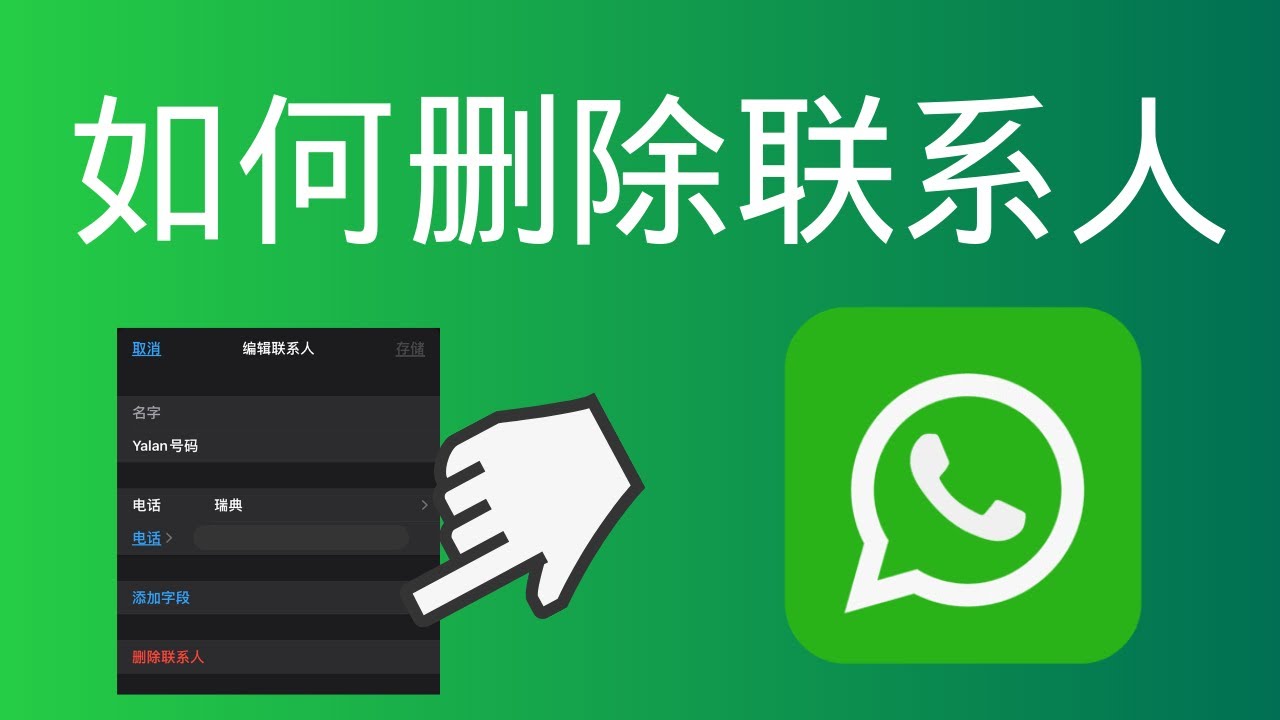 Does the other person know if you block them on WhatsApp
When you block someone on WhatsApp, they do not receive a notification, but they may notice some signs. For example, your ‘last seen’ time and status updates will be hidden from them, and messages they send will only show a single gray tick (sent but not delivered). According to 2024 statistics, about 35% of users […]